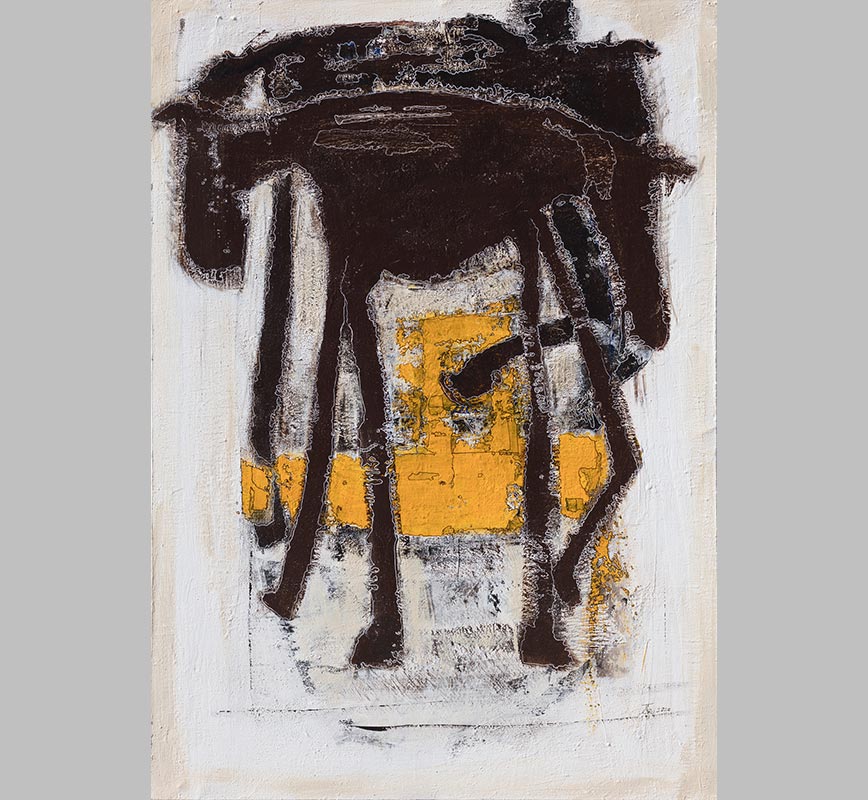
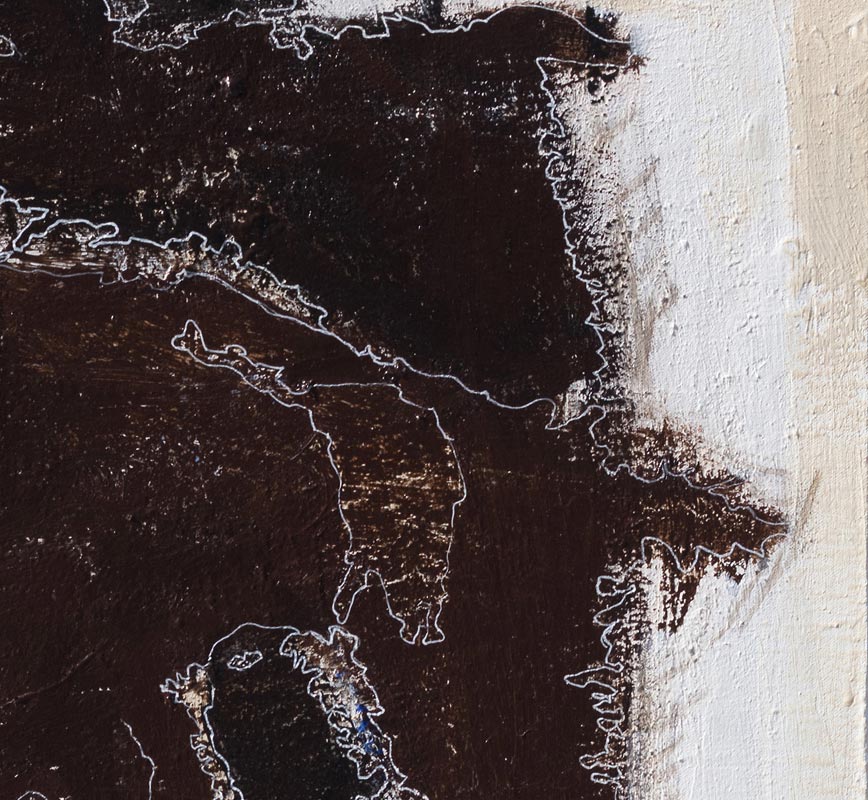
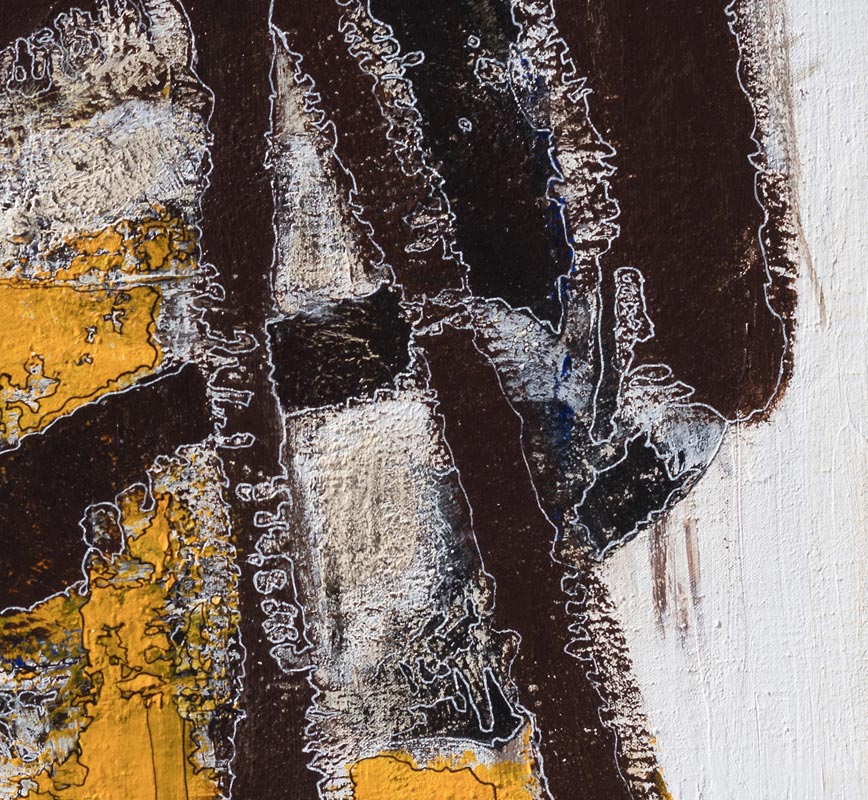
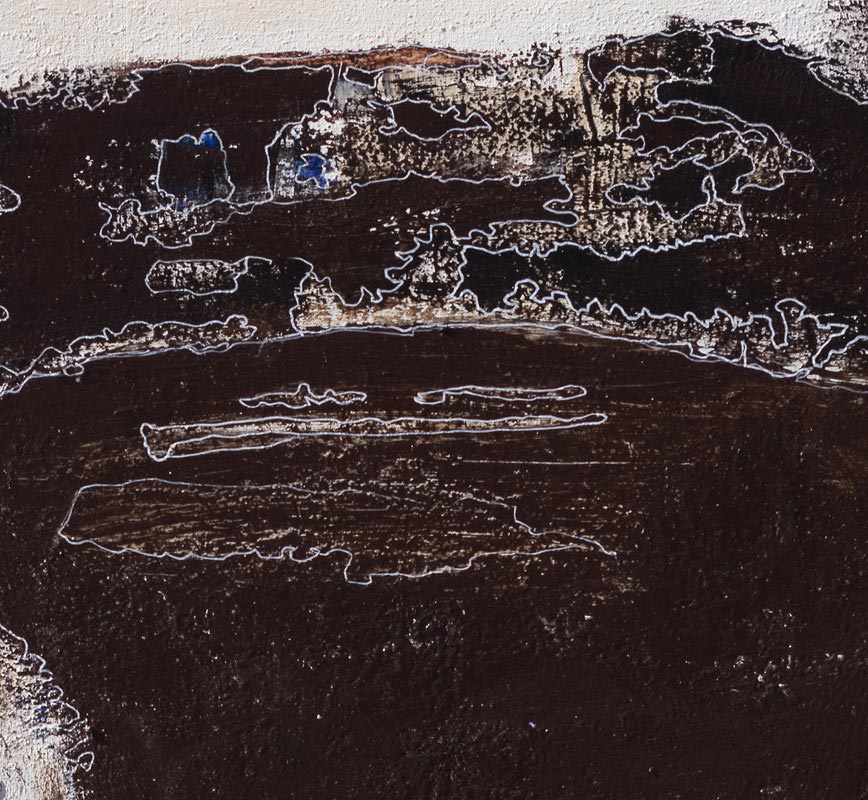
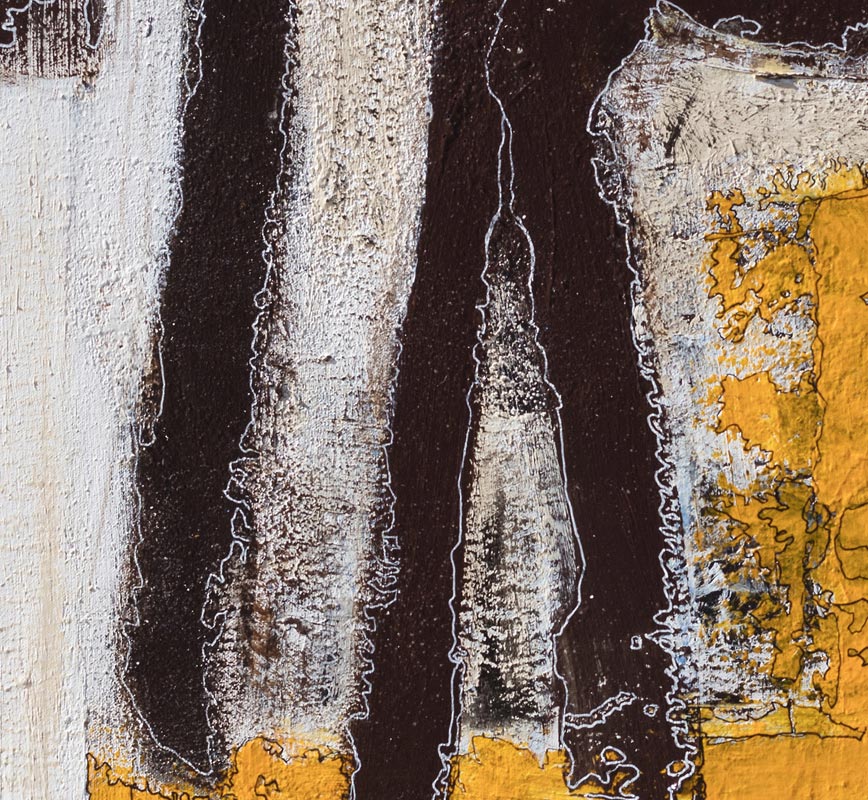
Alternative Destination stacks its forms vertically against a ground of warm brown, white, and blue, the thick black outlines that define each shape pressing against each other with the energy of things in transit. The figures resist singular identification: parts of animals, parts of structures, parts of something without a category, layered and interlocking in a composition that suggests movement without clarifying direction. The painting proposes not a place but the condition of traveling toward one, the suspended state between departure and arrival where the destination remains entirely open.
Alternative Destination stacks its forms vertically against a ground of warm brown, white, and blue, the thick black outlines that define each shape pressing against each other with the energy of things in transit. The figures resist singular identification: parts of animals, parts of structures, parts of something without a category, layered and interlocking in a composition that suggests movement without clarifying direction. The painting proposes not a place but the condition of traveling toward one, the suspended state between departure and arrival where the destination remains entirely open.
The forms resist singular identification, the black outlines carrying equal authority whether describing a creature or a structure. This is a world in which the categories of animal, architectural, and human are in active negotiation rather than settled arrangement, a visual logic William H. Johnson approached from a different direction: where Johnson grounded his folk-inflected figures in specific cultural storytelling, Jaru moves toward something more unresolved, the ambiguity the painting requires.
The title is the most direct statement in the work. An alternative destination is not a wrong destination but a different one, a choice made against the expected route. The layered, transitional quality of the forms enacts this: nothing here has settled into its final arrangement. The composition holds everything in the moment just before things resolve, which may be the most honest rendering of how journeys feel from the inside.