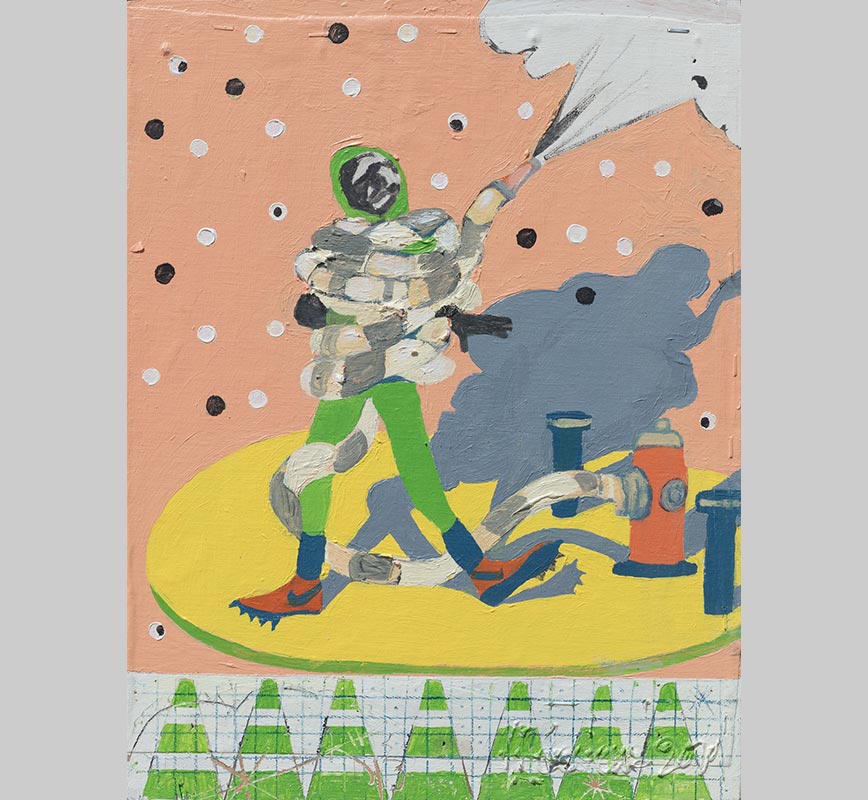
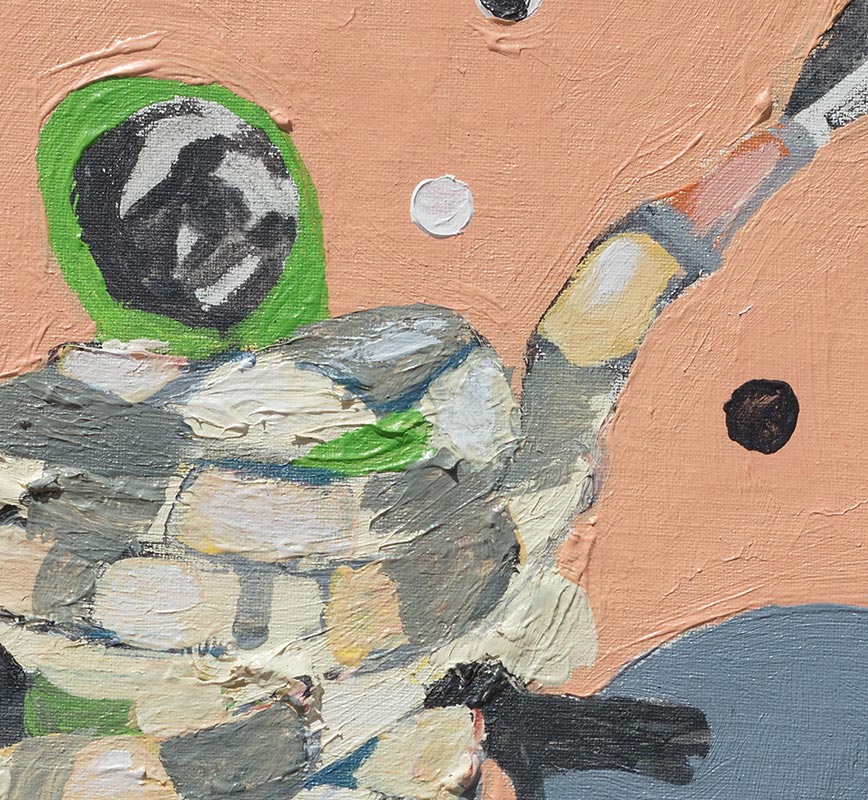
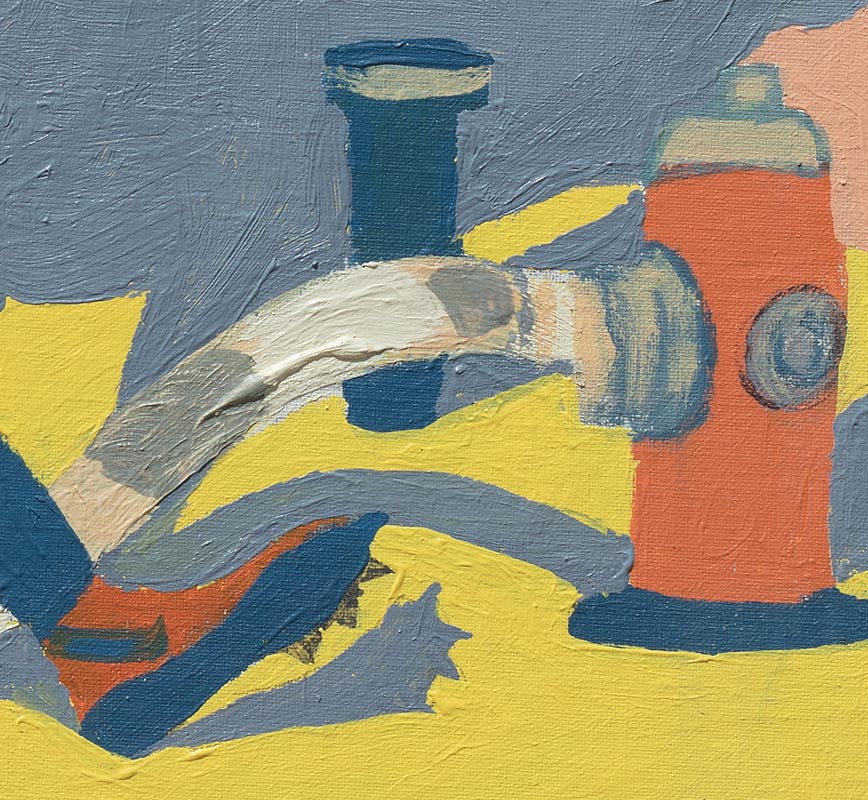
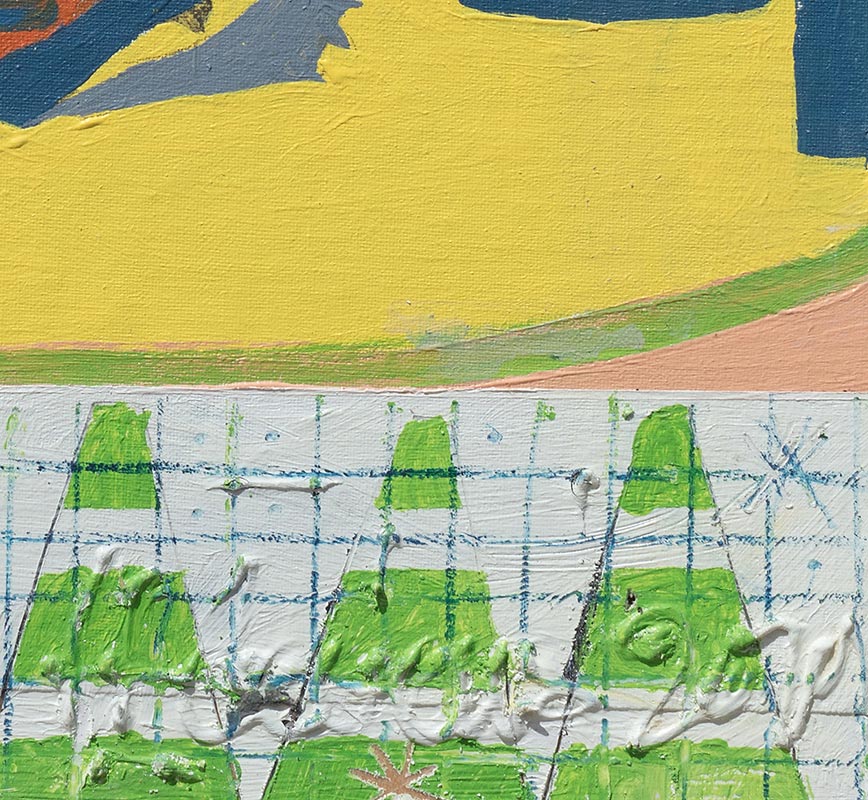
The rings in this paper work are more varied in color than in the canvas works: yellow, pink, green, and white mixed across the vertical field, with faces visible within some rings and eyes distributed through the composition. A small triangular form in the upper left suggests a sailboat or a distant signal. The surface is looser than the canvas works, as the paper ground absorbs the marks differently, giving the composition a quality of a scene caught in the act of assembling itself.
The rings in this paper work are more varied in color than in the canvas works: yellow, pink, green, and white mixed across the vertical field, with faces visible within some rings and eyes distributed through the composition. A small triangular form in the upper left suggests a sailboat or a distant signal. The surface is looser than the canvas works, as the paper ground absorbs the marks differently, giving the composition a quality of a scene caught in the act of assembling itself.
Henry Taylor’s paintings hold social and cultural experience through gestural, vulnerable surfaces: figures present but never settled, the social landscape alive around them. The same quality runs through Spring Break Sunday #2: the rings and their occupants are present but not fixed, color and mark still moving, the social field not yet resolved into a stable image. The spring break of the title is a social event, and the painting holds it that way: fluid, collective, unfinished.
The series ends here where it began: the crowd in the water, the colored rings, the figures navigating the field. Spring Break Sunday #2 adds a specific temporal weight: Sunday is the day after, the day the dream demands its accounting. The festivity is present; so is the awareness that it ends. The loose marks of the paper surface hold that awareness without dramatizing it. The rings float. The paper holds them.