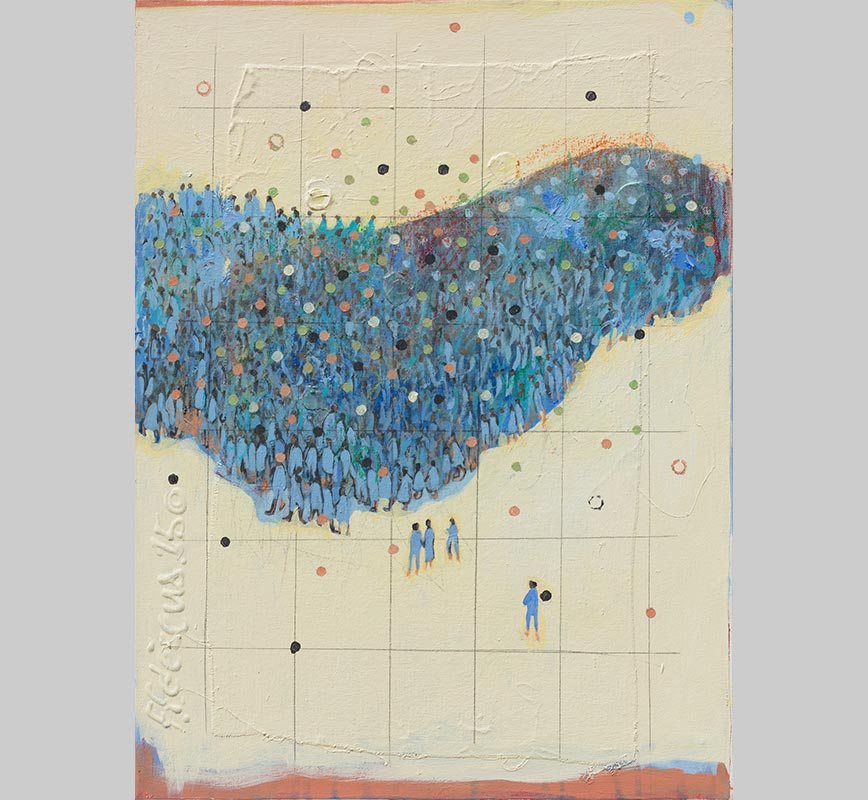
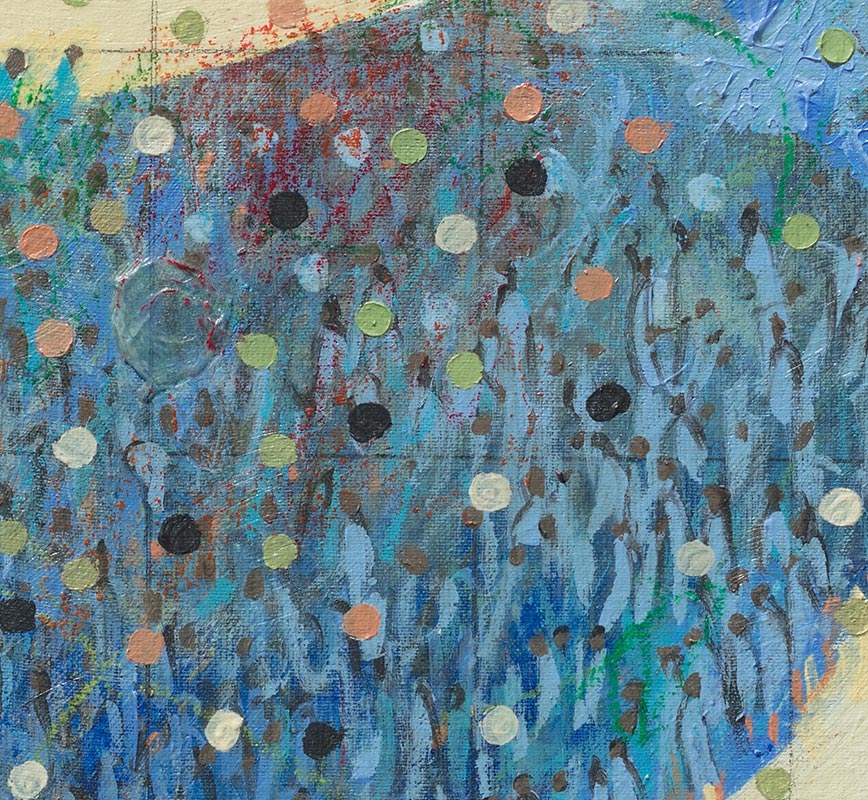
The title separates this canvas from the others in the Spring Break series. Spring break is a moment of arrival, the immigrant’s first taste of American leisure. A return voyage is something else: the journey back, the waters crossed again in the other direction, the life rings no longer purely festive. The painting’s surface, with its all-over field of yellow rings and simplified figures across a deep blue sea, carries both readings at once. The crowd drifts. The destination is not named.
The title separates this canvas from the others in the Spring Break series. Spring break is a moment of arrival, the immigrant’s first taste of American leisure. A return voyage is something else: the journey back, the waters crossed again in the other direction, the life rings no longer purely festive. The painting’s surface, with its all-over field of yellow rings and simplified figures across a deep blue sea, carries both readings at once. The crowd drifts. The destination is not named.
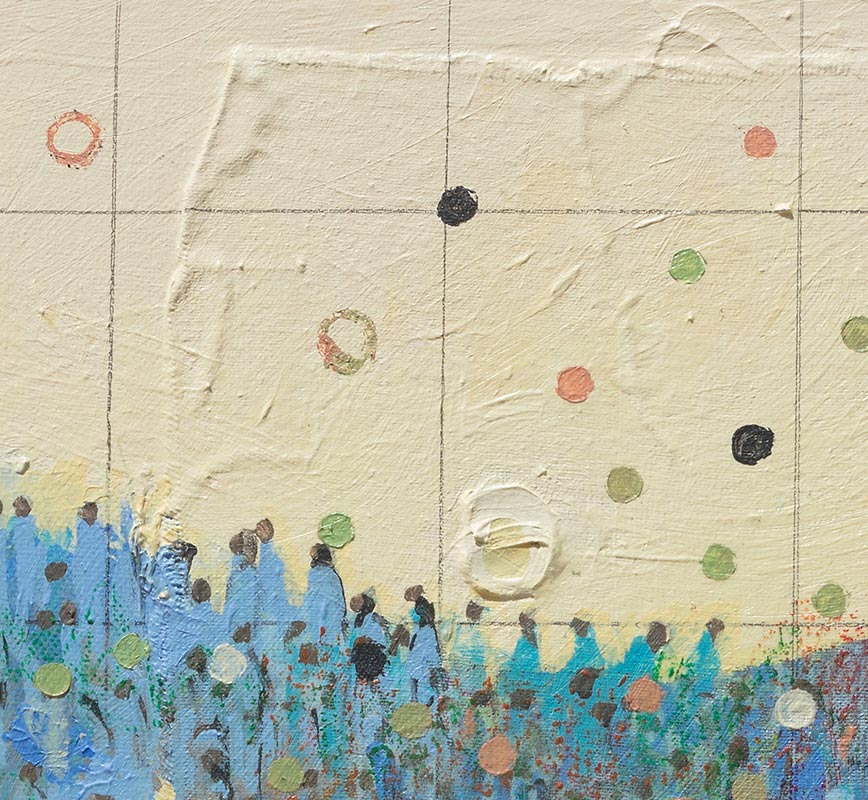
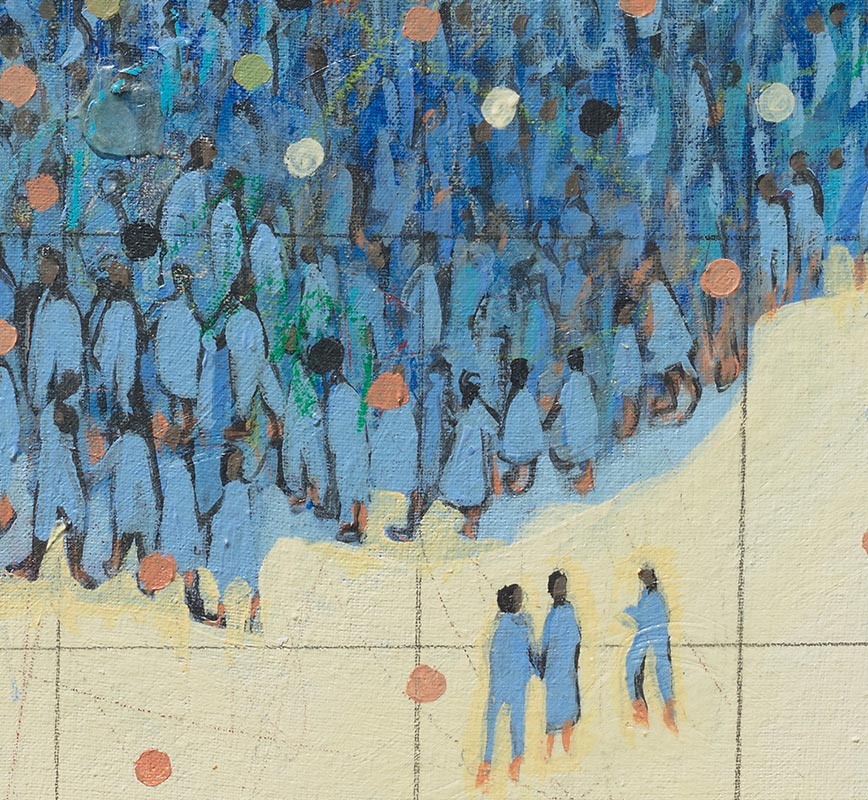
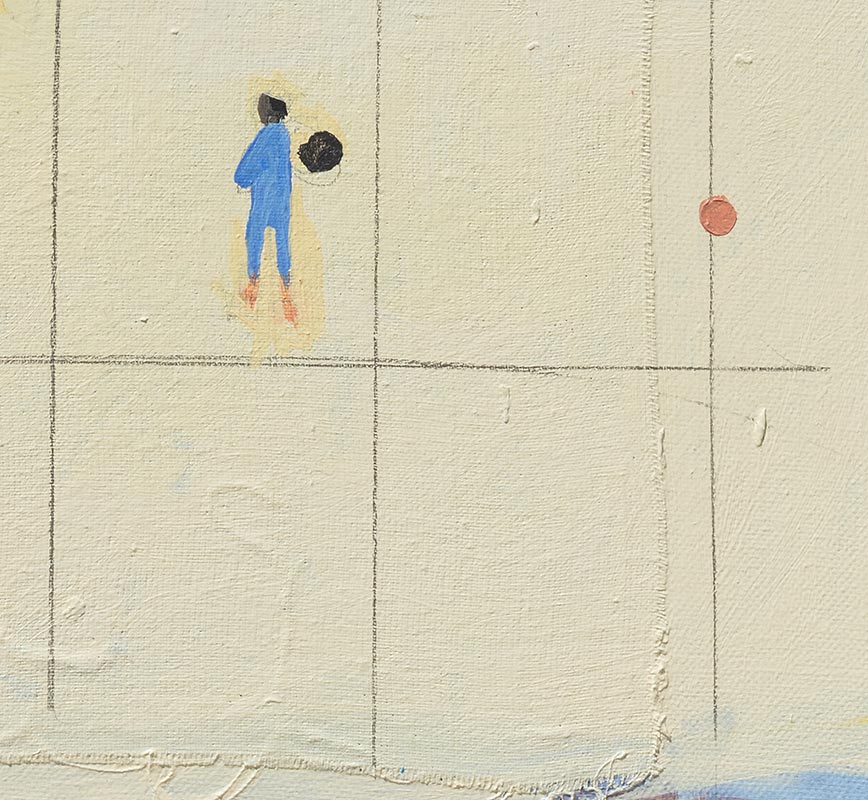
The composition scatters yellow life rings and their occupants across the entire blue field with no fixed center, the eye finding no hierarchy and no anchor. Some figures look out, some are turned away, some are obscured by the rings themselves. The simplified anonymous figures against the vast repetitive field connect this work formally to Jacob Lawrence, one of Deceus's stated formation references, whose Migration Series organized a people's movement through flattened, rhythmically repeated figures: the crowd as protagonist, the individual as one note in a larger composition.
But where Lawrence’s figures are going somewhere, Deceus’s are drifting: suspended in water, held by the rings, the journey’s direction unclear. The life ring is a safety device as much as a leisure object, and in the context of a return voyage its ambivalence intensifies. To be held up by a ring at sea is to be kept from drowning as much as to be floating freely. The title keeps the question open: where is this voyage returning to?