RUGGERO VANNI: A 42-FOOT COMMISSION IN BROOKLYN
An in-depth look at The Wind Blowing Over the Sea: the work, its making, and the thinking behind it
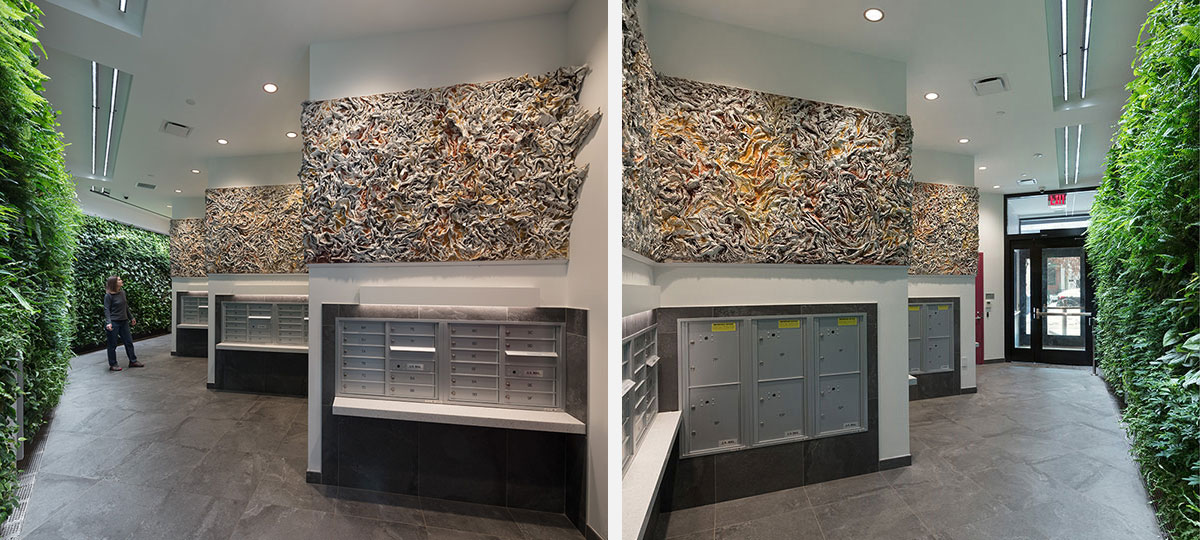
An Artwork Born with Its Building
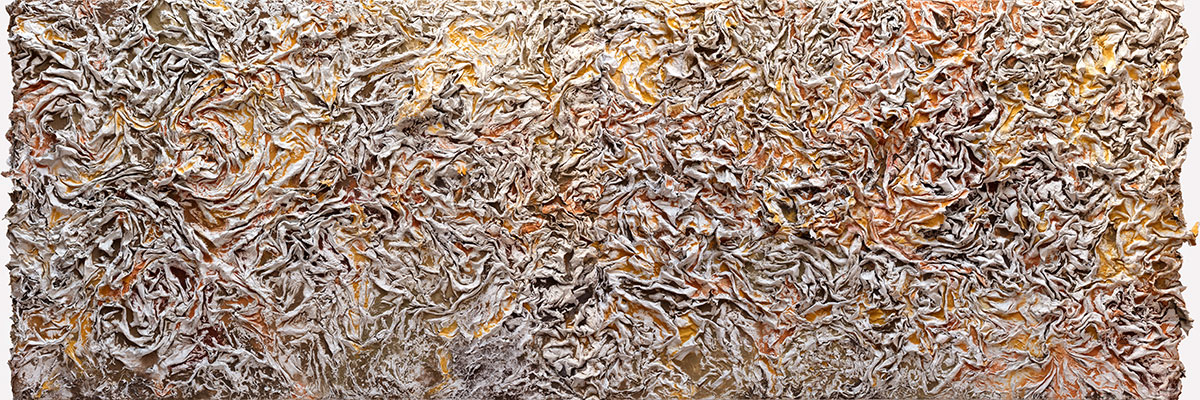
In the winter of 2026, Ruggero Vanni completed The Wind Blowing Over the Sea, a 42-foot relief artwork more than a year in the making, commissioned for the lobby of a new residential building in Bedford-Stuyvesant on the edge of Bushwick, Brooklyn.
The artwork had to be conceived entirely from architectural drawings: Ruggero Vanni was the natural choice, as he believes art blooms when it is conceived within an architectural space from the outset.
A Dialogue Between Nature and Art
From the first reading of the drawings, the lobby revealed itself as anything but a neutral space. Facing the wall where the artwork would go, running its full length, was a living green wall: lush, dense, constantly growing, a three-dimensional presence in shades that shift from deep forest green to bright chartreuse. Including it in the artistic concept became both the starting point and the governing idea.
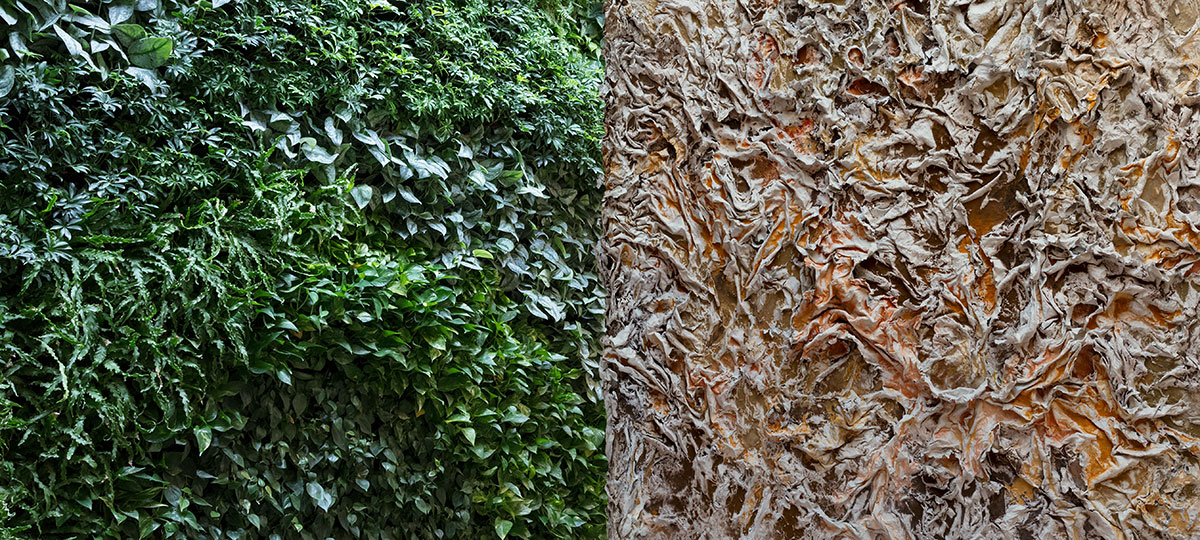
"I immediately conceived the artwork in constant visual interplay, dimensionally and chromatically, with that great extension of green and its layered, three-dimensional presence."
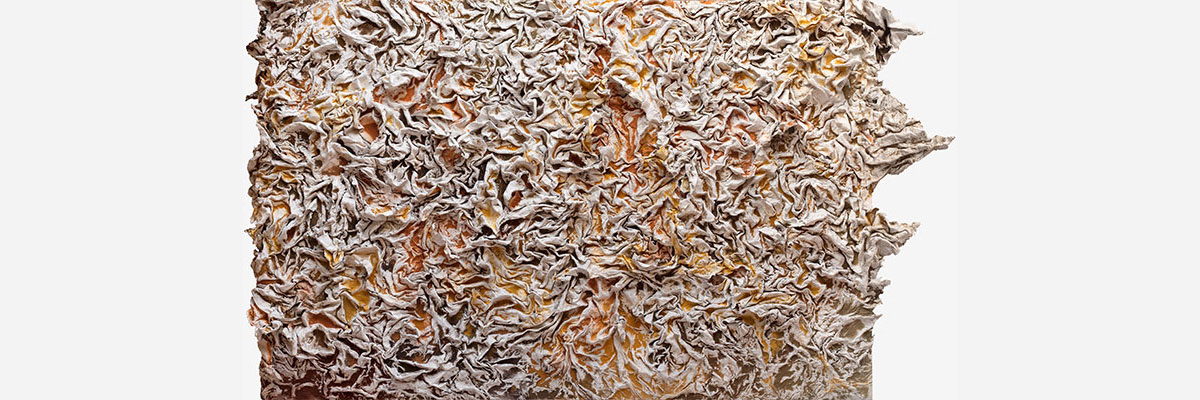
Ruggero decided to add a sculptural dimension to echo the vegetal counterpart, working the entire surface in high relief. "The Pergamon Frieze immediately came to mind," Ruggero recalls, "a composition developing continuously across its entire length, more like a grand frieze than a painting on a wall." It became the structural model for everything that followed.
The Colors from the Earth
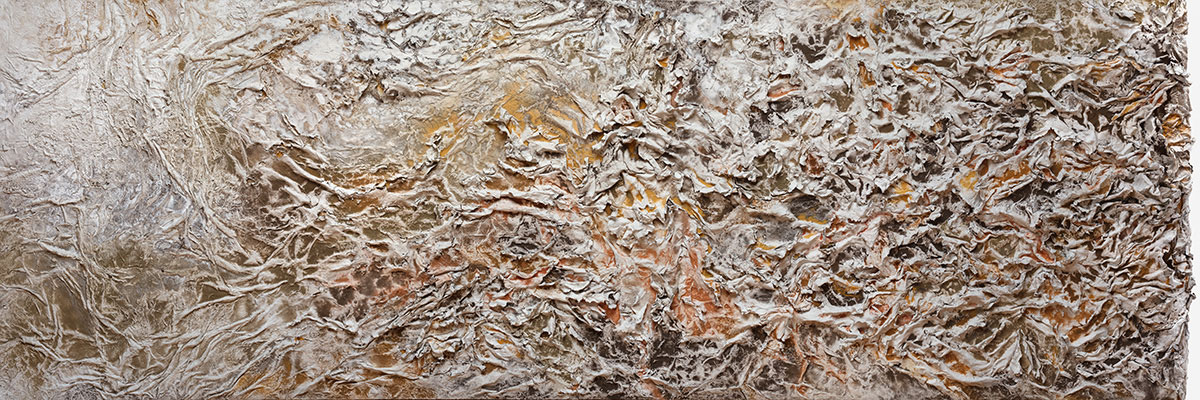
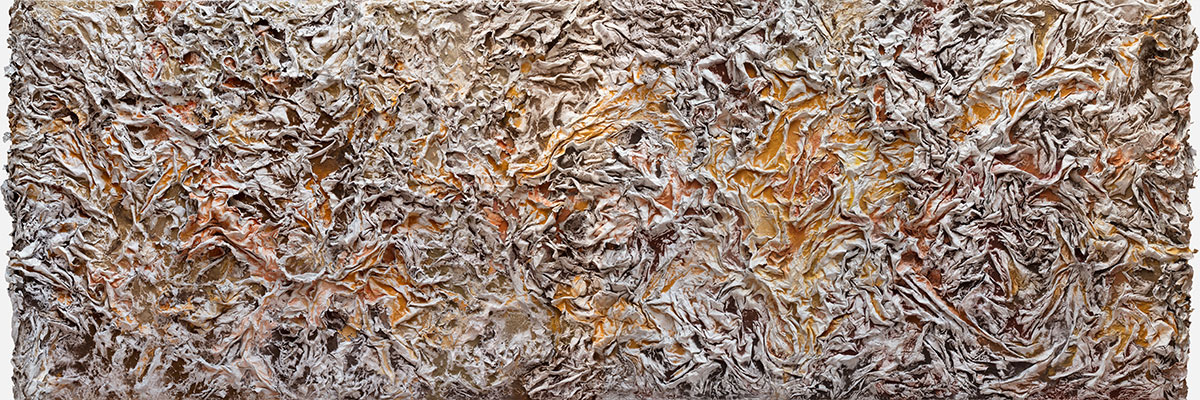
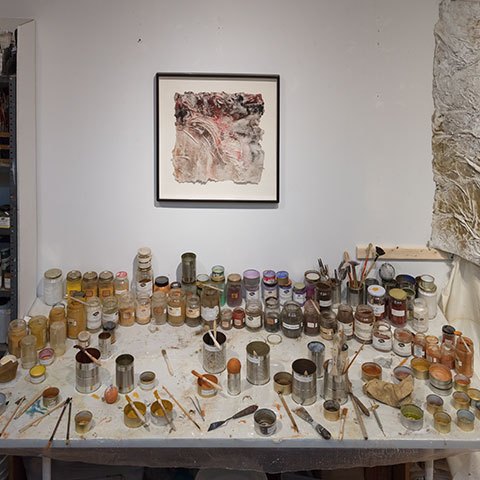
Then there was the question of how color could enter the conversation. "I knew that saturated or high-key tones would clash with the intensity of the greens opposite. I gathered thirty-two distinct earth pigments. The differences are subtle but real. There are about nine different burnt umbers alone. What I needed were colors that would look almost subdued in isolation, but bloom when placed in relation to the multiple greens of the wall across." The earth pigments were integrated directly into the surface of the relief, preserving the soft, velvety quality of raw pigment alongside the modeled, sculptural form of the casting.
From Safe Haven to World
All came together in the composition. "I was thinking of music that builds layer by layer, beginning as a whisper and gradually gathering force and depth." The architectural bays of the lobby corridor reinforced this concept: each bay a contained episode, like a cove on a coast, the whole sequence opening toward the street. "I conceived the whole as a fetch developing across the surface of the sea." Fetch is the term sailors use to describe the distance over which wind travels to build waves.
The relief reflects this: the leftmost section starts with barely any modulation, a whisper of surface. As the work moves through the bays toward the exit to the street, it accumulates, deepens, becomes physically dense. In the final section, certain forms break out of the picture plane and strike the adjacent wall, like a wave splashing on the rocks.
Ruggero thought of this as a contribution to the architectural environment, inseparable from the space it inhabits and from the people who move through it every day. "The home is a safe haven, where the wind is calm and everything is at rest. My artwork is there to accompany their transition from home to the turbulence of the world outside."
A Year in the Making
The work took close to a year to complete in two complementary phases. He built the relief first, then worked it with color to deepen the flow the surface had already created.
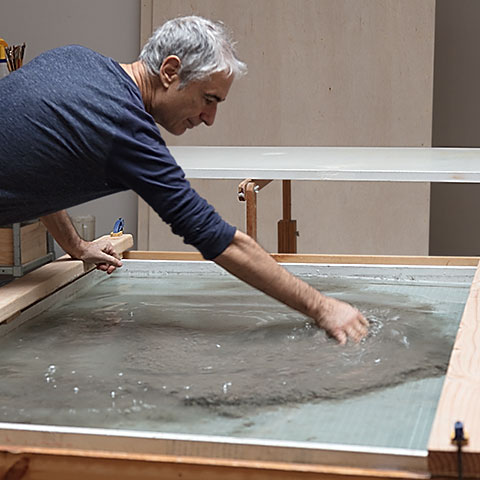
Forming the sheets
Pulp suspended in the vat.
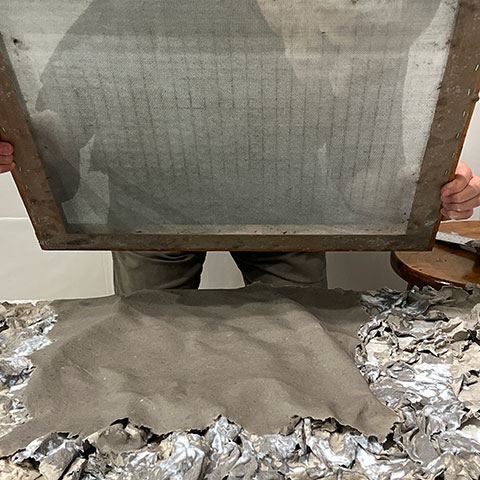
Lifting the screen
The wet sheet released from the screen onto the artwork.
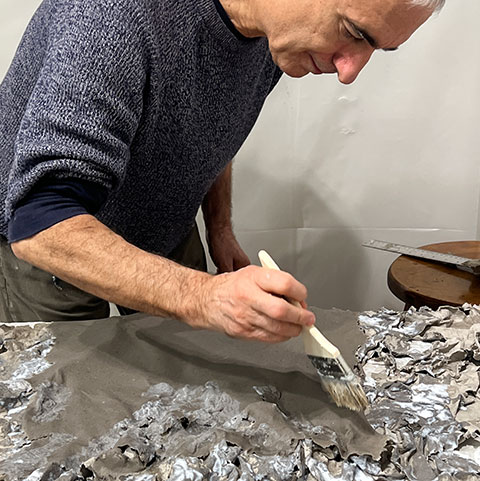
Casting the relief
The wet sheet pressed and worked into a three-dimensional form.
Assembling the panels
The cast sheets assembled onto the panels to build the continuous flow of the sequence.
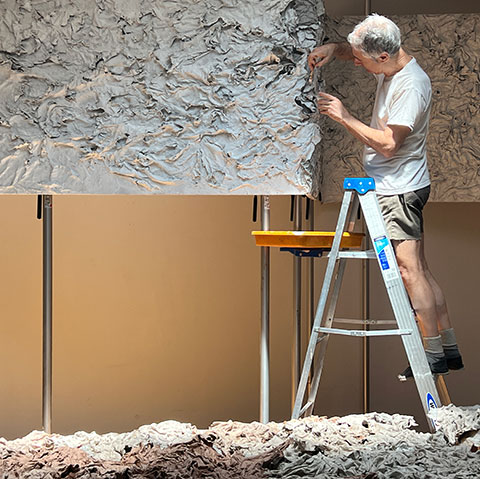
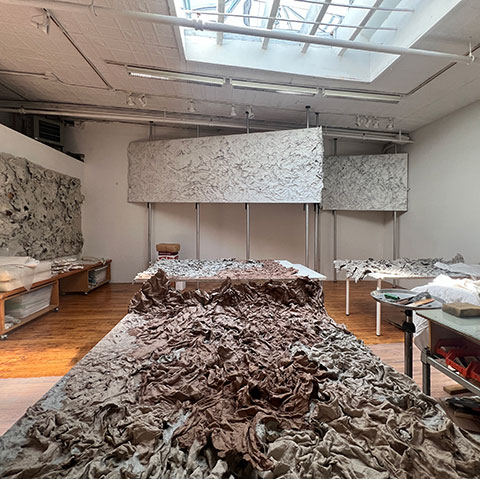
The studio at full scale
Panels suspended and laid out to view the flow across the full 42-foot length.
The pigment table
Thirty-two earth pigments sourced from several countries, each with its own temperature and character.
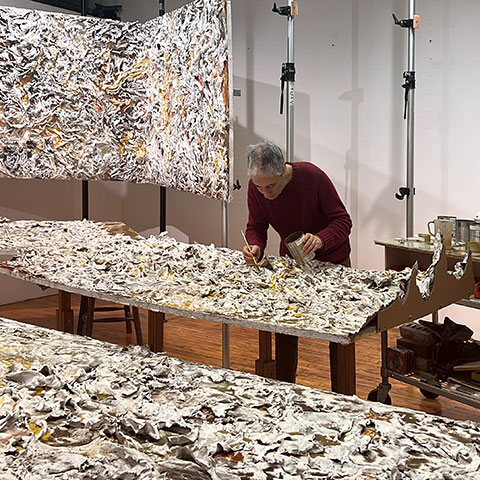
Pigment worked into the relief
Ruggero painting on several panels.
Final touches
Deciding on color accents to complete the artwork.
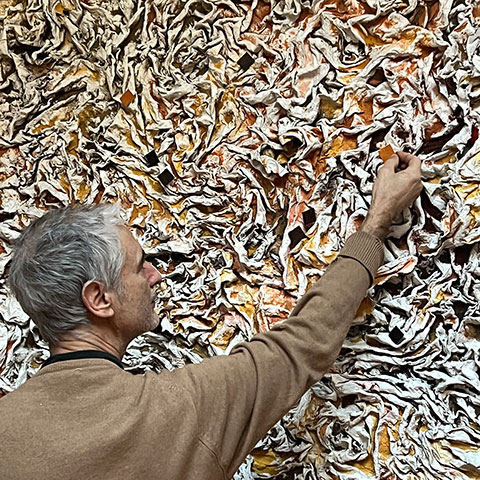
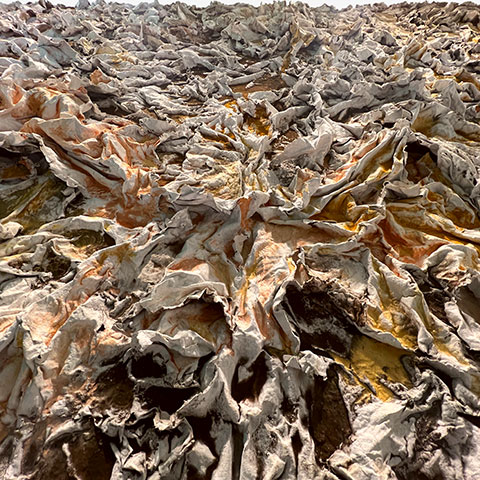
The surface close up
The high relief and color form an inseparable concept.
To build his surface, Ruggero used a technique rooted in traditional hand papermaking: pulp suspended in a large vat and lifted on a screen to form sheets, then pressed while still wet onto relief molds he created to cast the three-dimensionality. Once dry, each sheet was assembled onto the panels in sequence. Then color was worked panel by panel with the adjacent one always beside it, the full sequence put up repeatedly to ensure the accumulation of earth pigments followed and deepened the accumulation of relief, from surface ripple to wave. The process was inseparable from the concept: the patient accumulation of material in the studio mirrored the gradual accumulation of force that the finished work describes.