GIORGIO CRISAFI: WHAT THE FIRE KEEPS
An in-depth look at the creation and the thinking behind his ceramic sculptures
Giorgio Crisafi's ceramic sculptures stand columnar and frontal, addressed to the viewer with the directness of an actor taking a position on stage carrying a charge that preceded us and will outlast us. For him, sculptor from Umbria, the question of how to hold presence in permanent form arrives in clay with reliefs of a symbolic vocabulary, a message that is votive, an intent that contemporary art has largely abandoned.
In archaic Greece, worshippers at the Sanctuary of Artemis Orthia in Sparta deposited terracotta masks as votive offerings. Some early examples may have been wearable, but many later ones translate perishable performance masks into durable clay dedications. Their force lies in this passage from enactment to deposit, from masked presence to permanent remainder. The dance ended; the clay kept what the dance was. This is the logic Crisafi works inside: not the theatrical mask that amplifies expression and psychology, as Greco-Roman theater masks do, but the votive mask that carries presence after the performance has dissolved. When you stand before a Crisafi figure, that is what is being proposed: not "look at me" but "receive what I am."
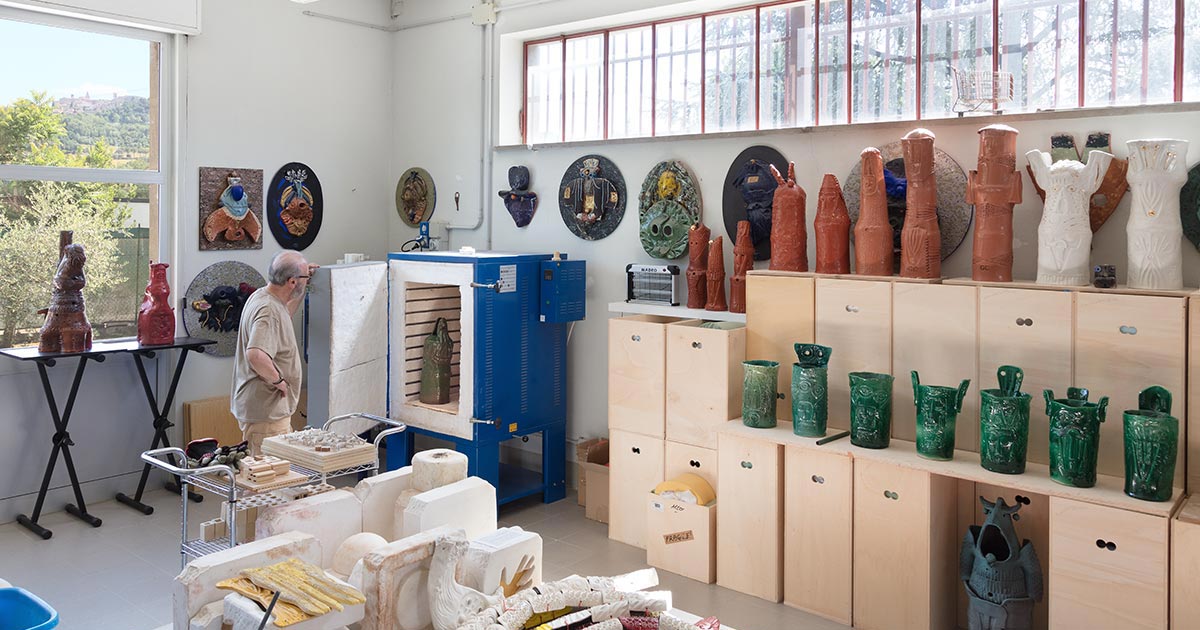
Giorgio Crisafi in his studio in Todi, Umbria
Crisafi's art is enriched by his life in theater as actor, playwright, and director, which gave him a Stanislavskian discipline: the technique of emotional memory, directed not toward psychological truth but toward what lies beneath it. "To find the form of a character, I search within myself for an archetype, a founding principle of life from which thought and image can develop." Crisafi follows the same path in clay, and draws the same conclusion about the object it produces: "When theater dies outside its performance, the created object has a life of its own: it continues to exist without words, without the actor." A structural decision about what art is for.
The result is a body of work in which the human figure carries what is left when the individual has been subtracted and the archetype remains. This is an unusual position in contemporary art, which has generally preferred the ephemeral, the process-based, the self-consciously dematerialized. Crisafi makes objects that are among the most materially committed available: heavy, fired, permanent, addressed to duration.
Legami: The Hidden Bond
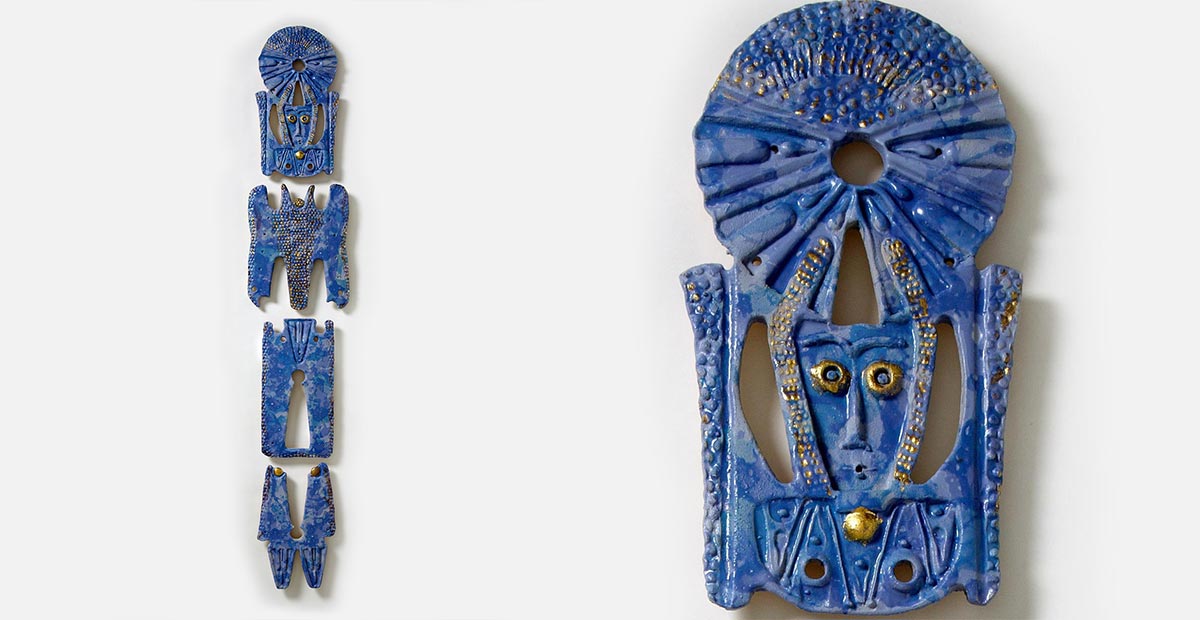
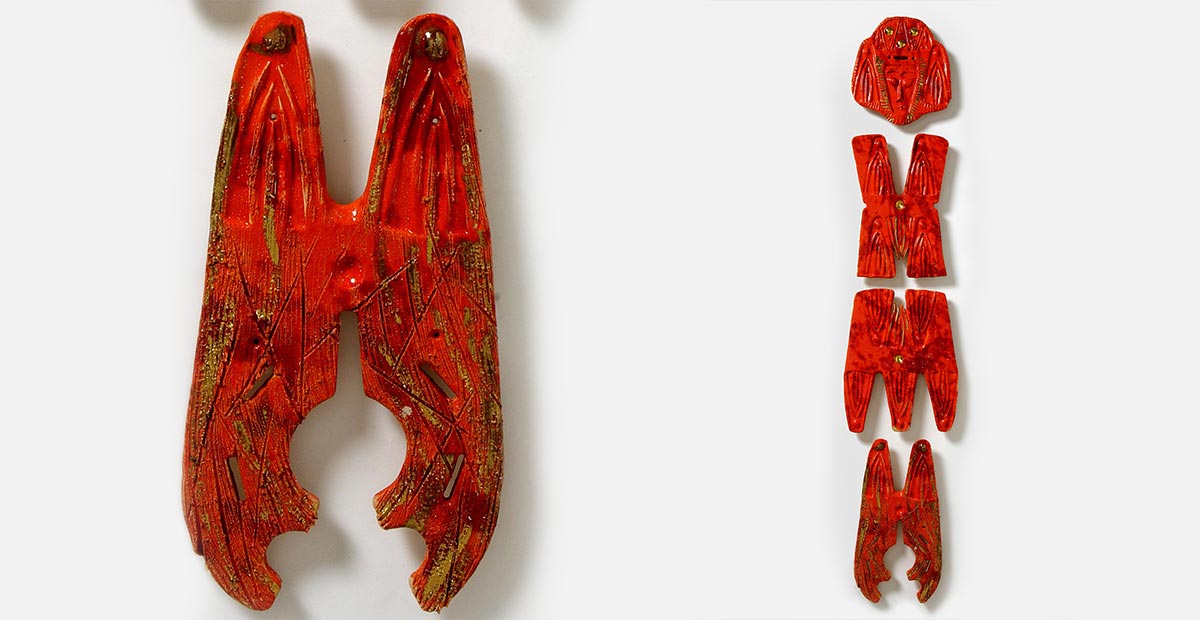
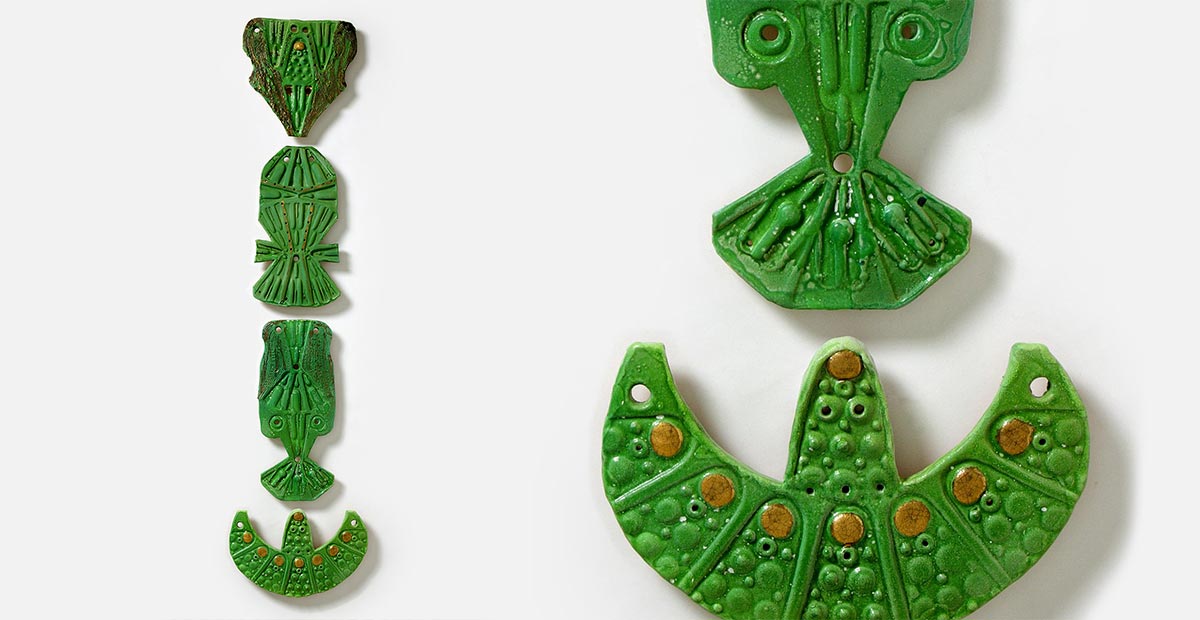
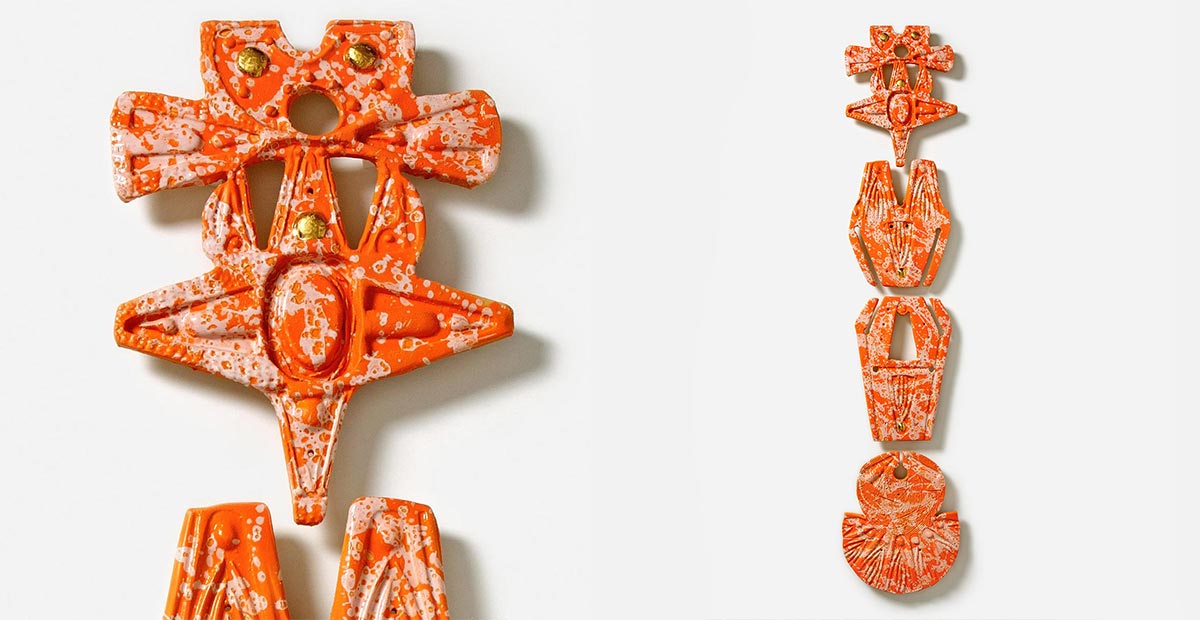
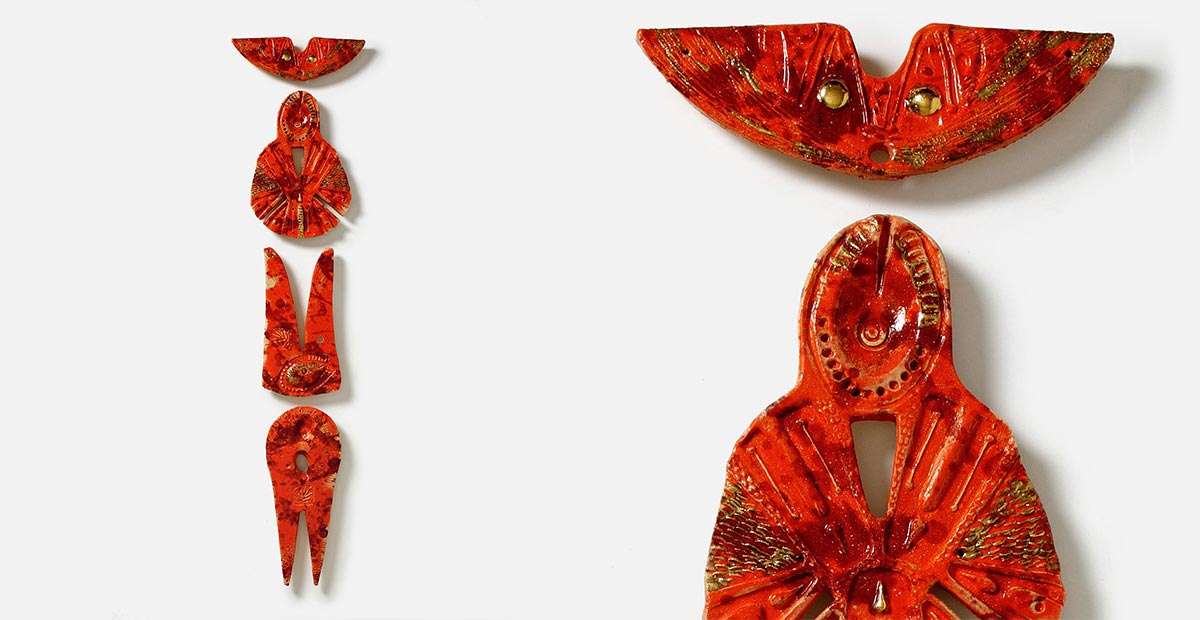
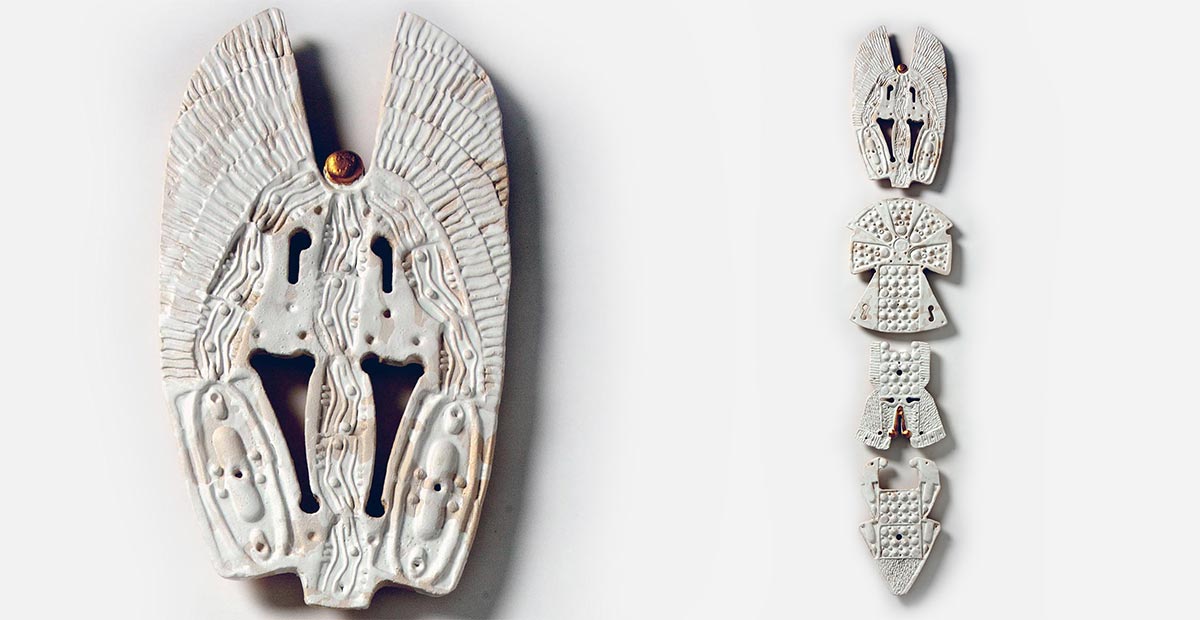
The Legami series imposes presence. At nearly eight feet in some works, these figures exceed your body: a vertical declaration that the viewer must physically acknowledge. It is scale as argument, establishing the figure as something more than human without ever being inhuman. The body is represented as a schema, a diagram of a four-part vertical sequence of individual pieces: head, torso, pelvis, footing. The gap between the pieces is full of tension: the title promises bonds, ligaments, but there are none. The gaps between the four elements are constitutive voids, spaces where the viewer's perception must complete the figure, where the mental act of reading a body as continuous is made conscious. The viewer is invited to see not only the body but also the philosophical proposition of what holds the body together.
Apparizioni: Emergence
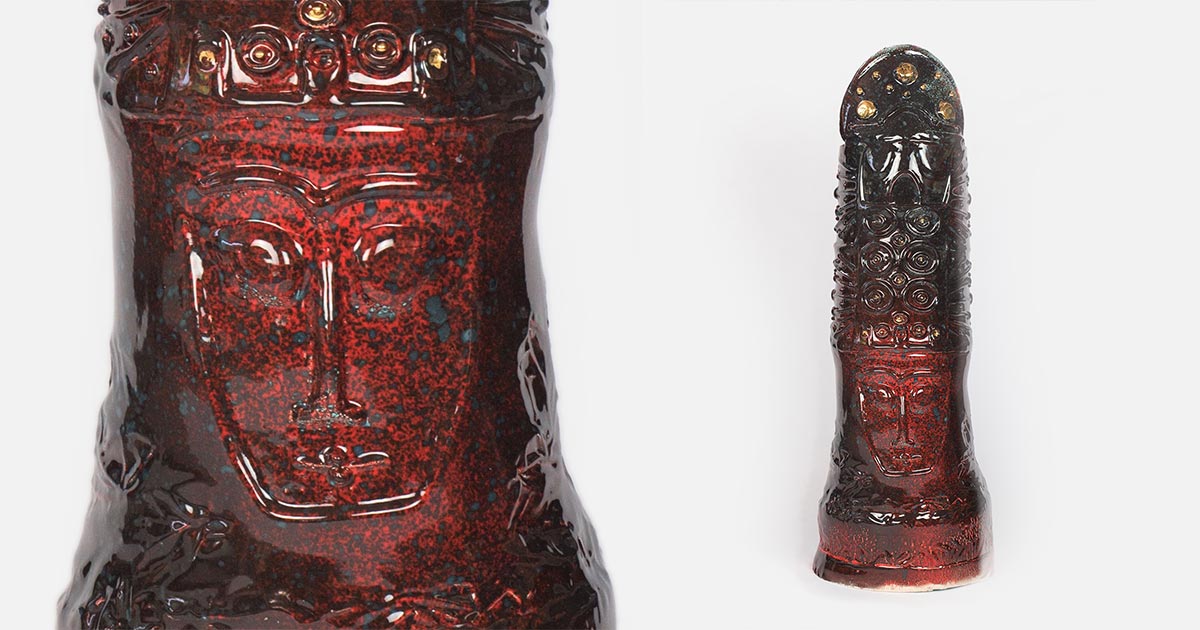
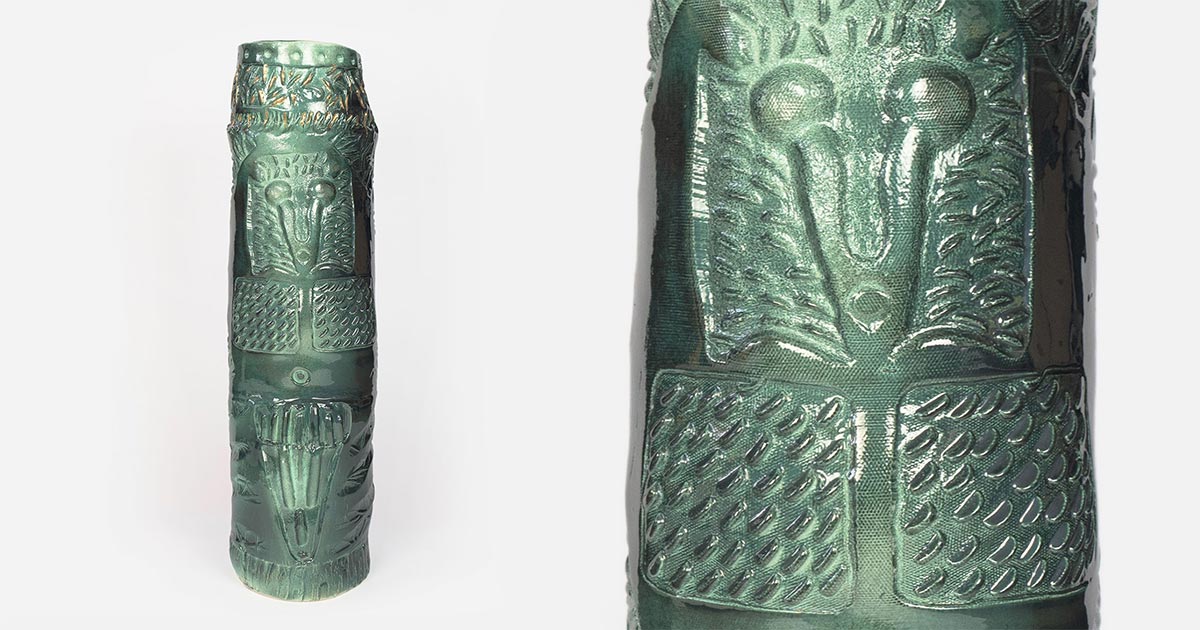
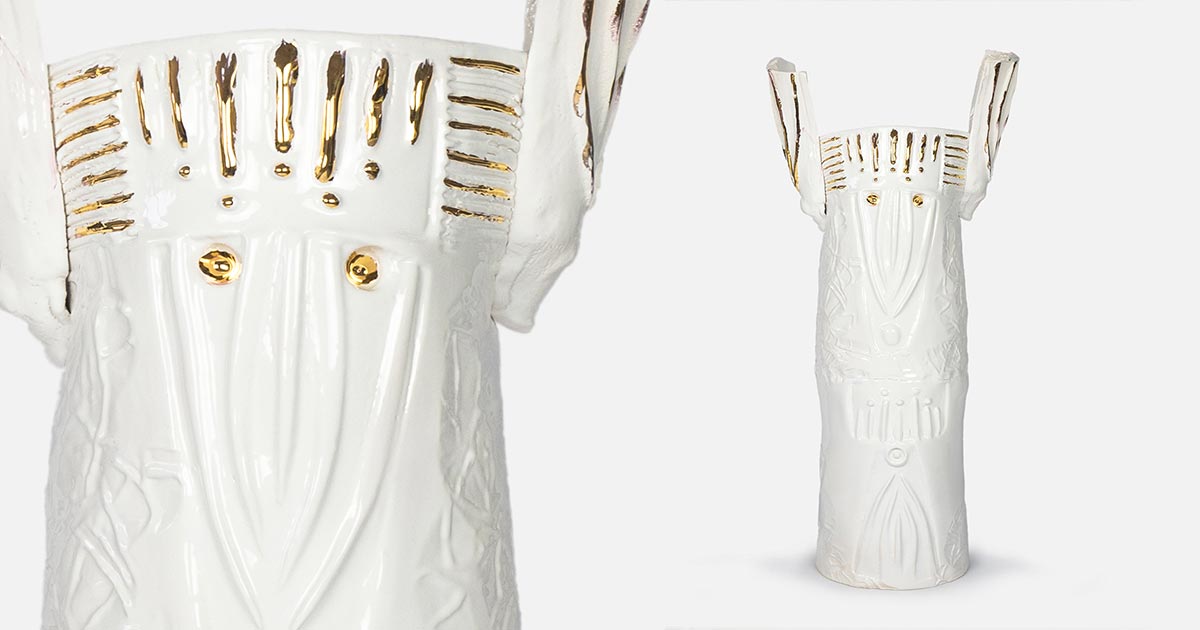
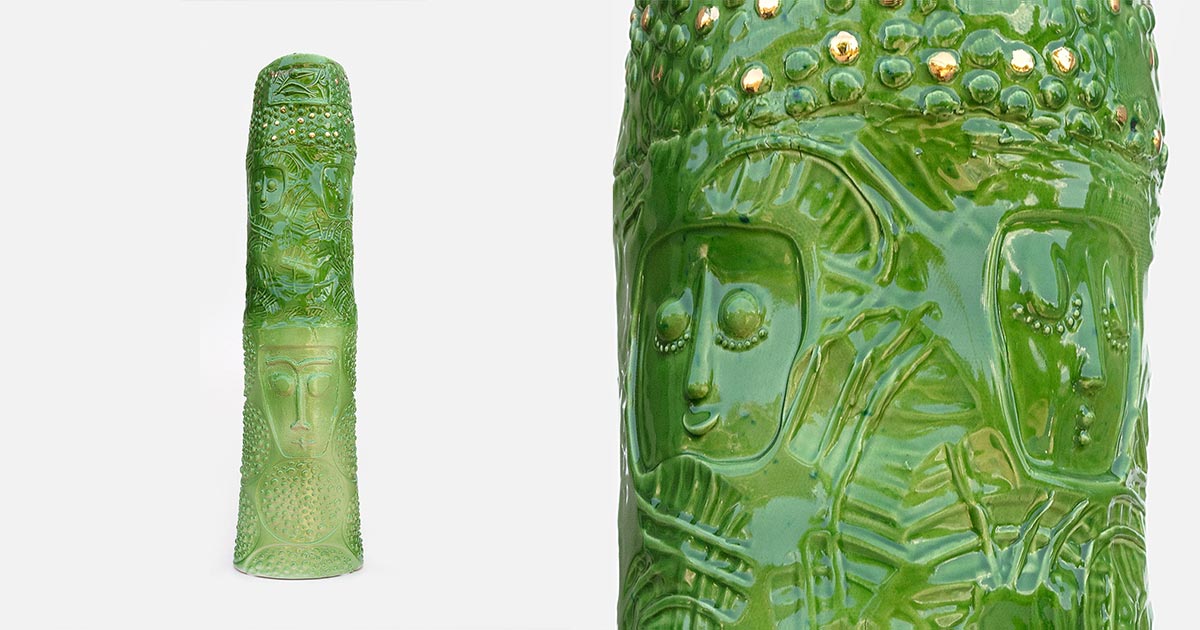
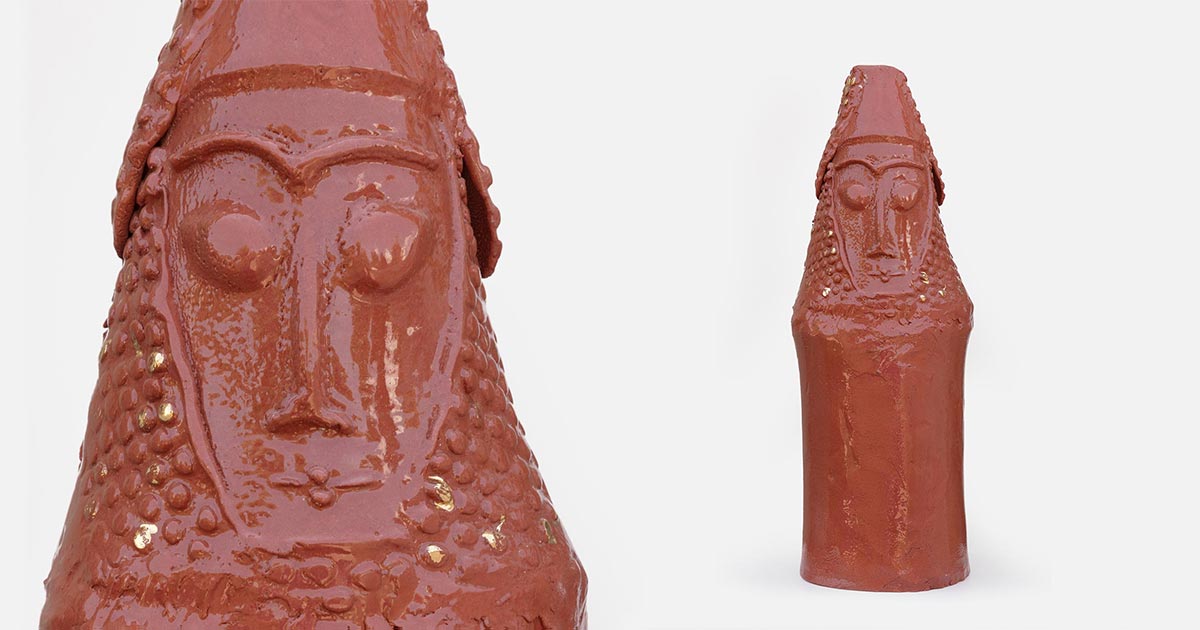
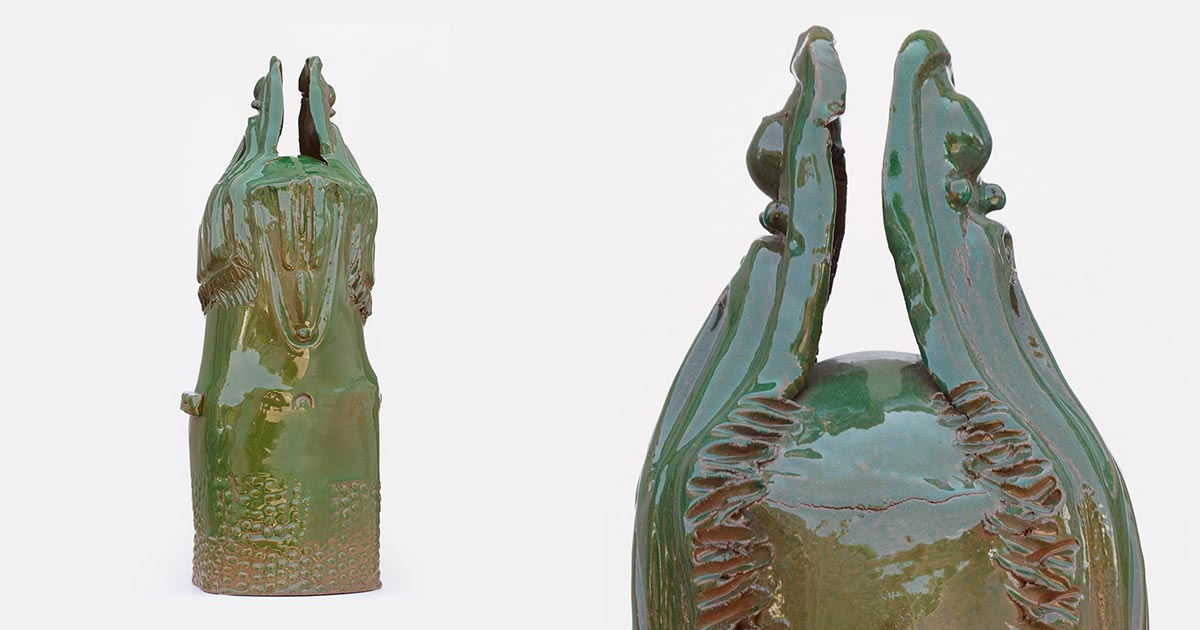
The Apparizioni are intimate artworks, requiring the viewer to come toward them. These are ceramic columns, dense with layered reliefs accumulating over the entire surface, from which a face gradually surfaces. The face is not located at the top of the column where you might expect it; it is distributed, embedded, emerging at several points simultaneously, as a formal argument about how presence works: not concentrated in one place but distributed through matter, diffuse, accumulated.
This reminds us of the masks in the Maya temple facades that are integral to the structure itself, not applied to a neutral wall but emerging from it: the facade becomes a living surface, the building declares itself animate. What Crisafi does in the Apparizioni operates by the same principle: the column is not a support carrying a face but a surface through which a face becomes legible.
The gold luster that punctuates some works in the series reads as votive marker, as the gold that gets applied to sacred objects across multiple traditions from Byzantine icon painting to Etruscan metalwork to the devotional art of pre-Columbian Mesoamerica. None of these traditions are cited literally, but evoked at the level of visual grammar, the grammar of objects that have been marked as set apart, as consecrated to a purpose beyond use.
Maschere: From Theatrical to Votive
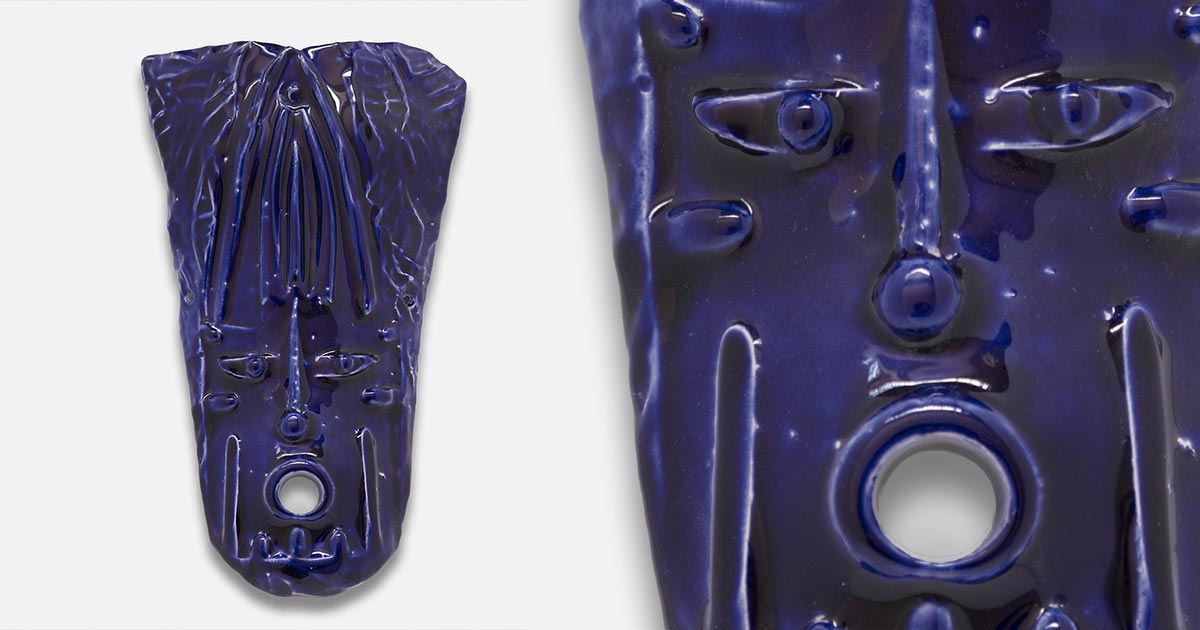
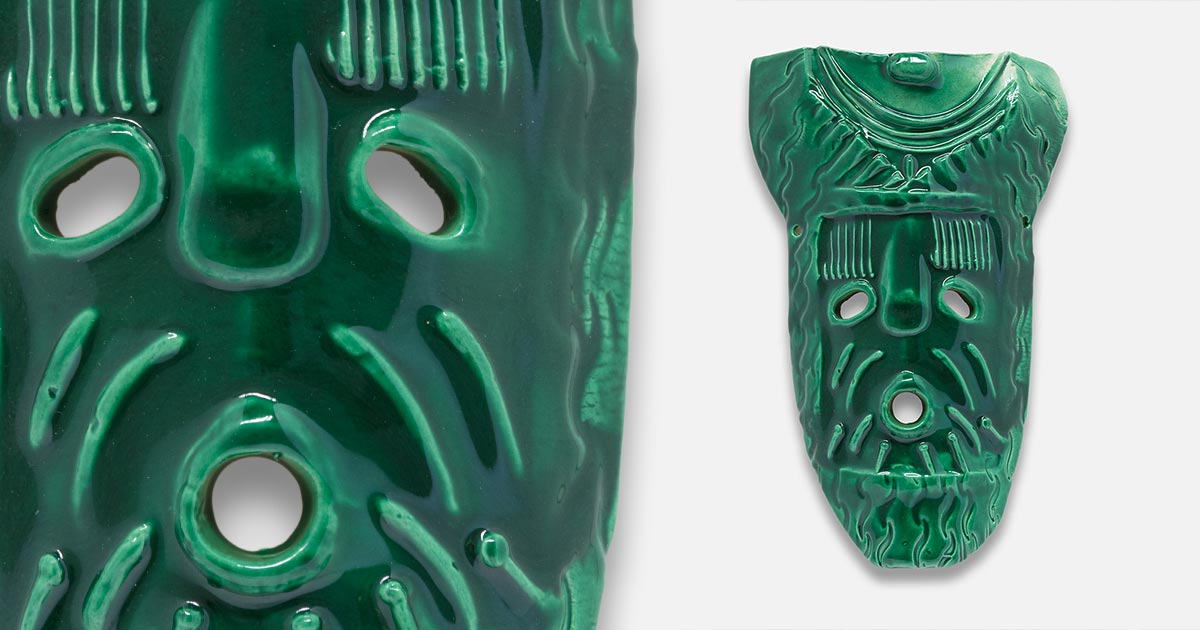
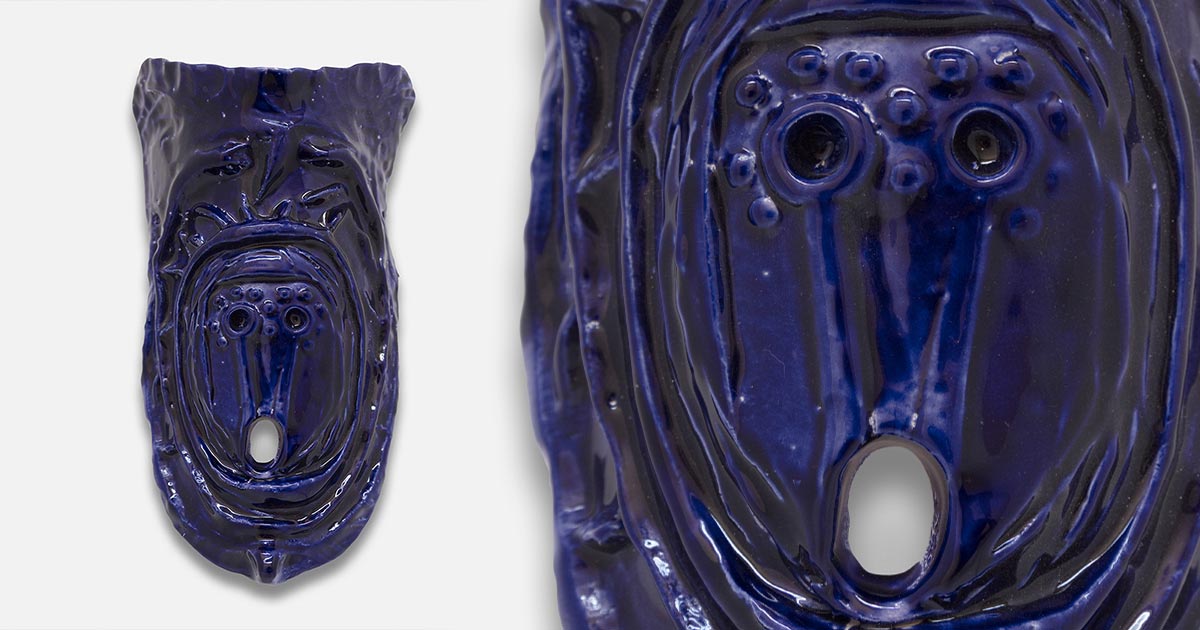
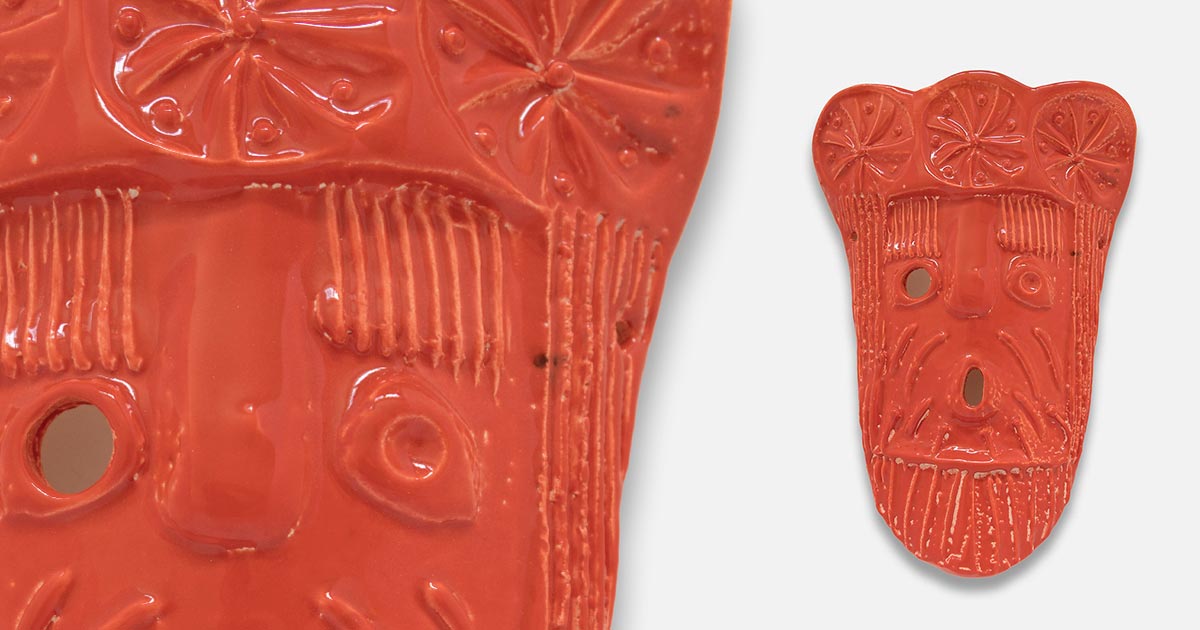
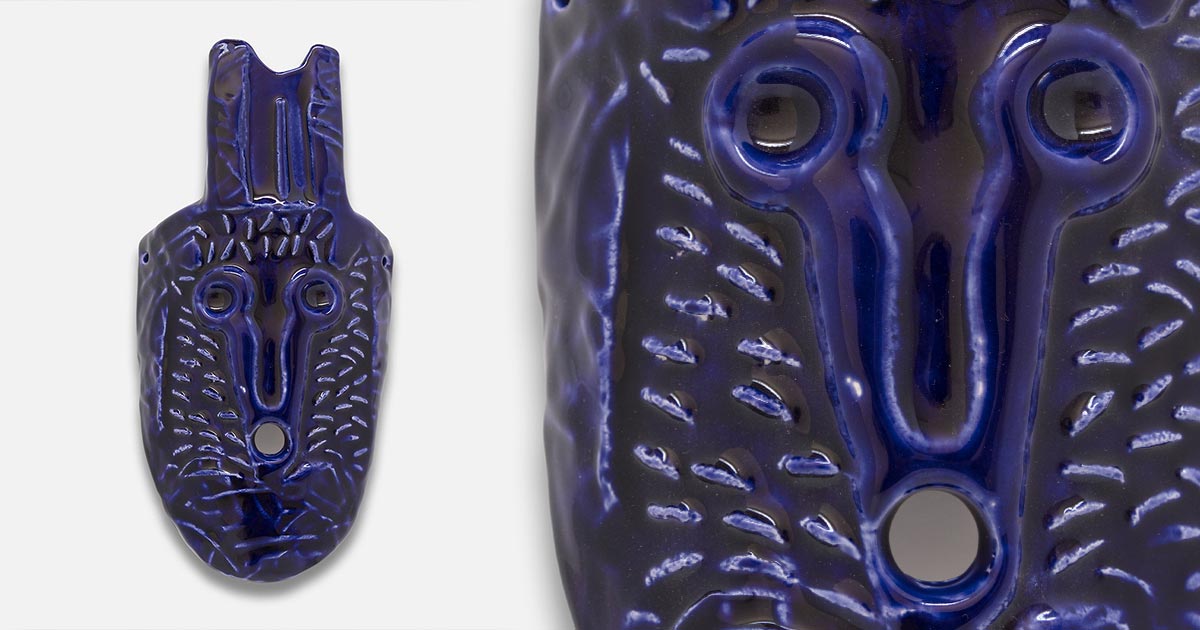
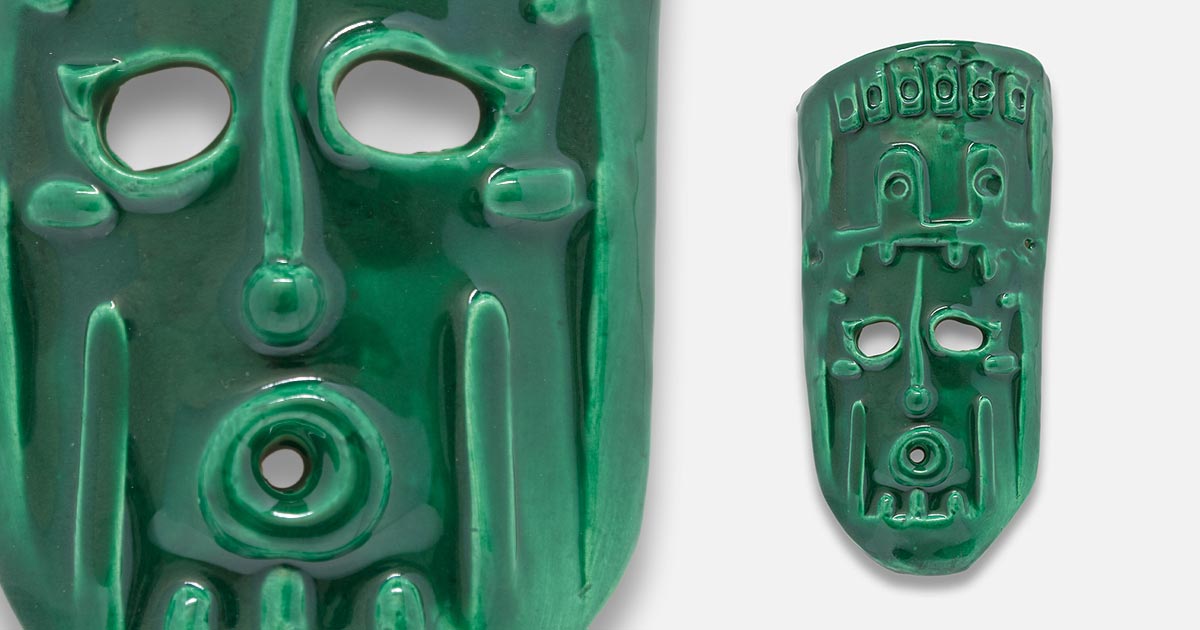
The Maschere isolate the face from the full columnar body of the Apparizioni and present it as an autonomous object, focusing the argument to its irreducible element. The mask as a form has a longer history than almost any other object in the human archive: ritual, theatrical, apotropaic, ceremonial. Crisafi's ceramic masks enter that history plainly as art.
Each mask he creates is handled differently. One is quiet, its glaze smooth and pooled, its features reduced to apertures and ridges, the face as minimum sign. Another is energetically worked, covered in raised nodes and concentric patterns, the surface almost tactilely aggressive, the features dynamic rather than still. A third carries heavy organic relief, forms suggesting cascading hair or beard or pure material energy radiating from the central face, the glaze gathering in the deep channels so that the work seems to be condensing rather than displaying its content.
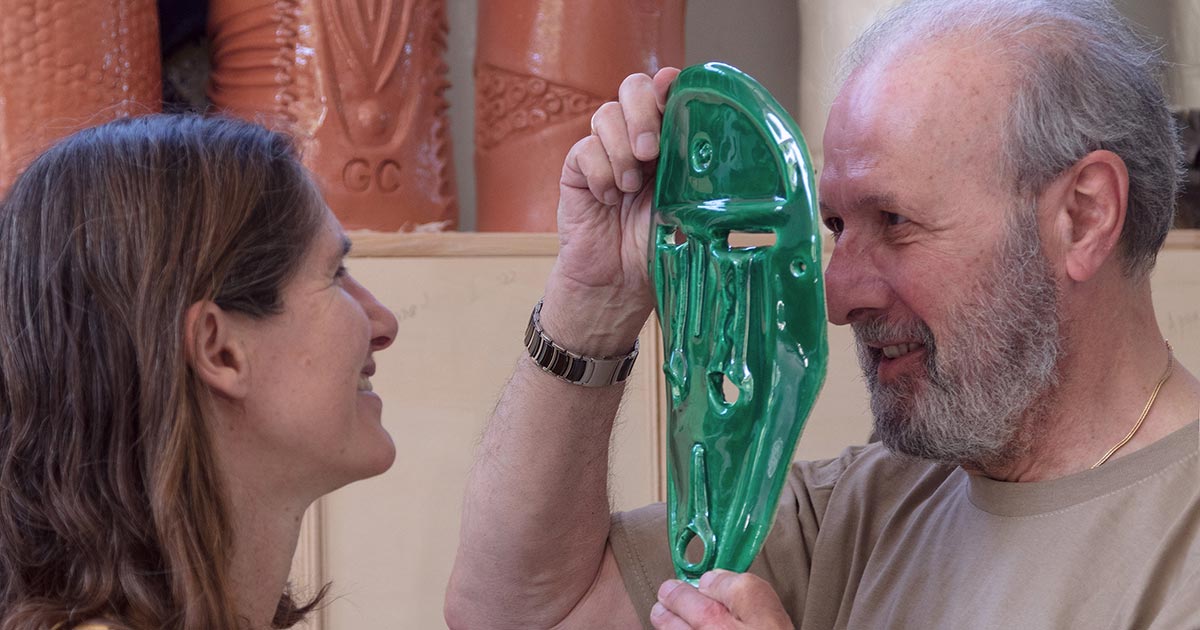
The image of Giorgio in the studio, holding a green mask between himself and me, is worth pausing on. Neither of us is wearing the mask. It is held up at eye level, face outward, for inspection. The mask as object of contemplation, held away from the body, presented to the other person's attention. The face on the mask is addressed to the viewer. It is not hiding anyone.
Color: A Bridge
Crisafi has been specific about what color and luster do in his work: "My way of applying colors and lusters is meant to enclose their history and their mystery, through a screen that makes everything ultimately more luminous and vivid, like the display of the present." The objects echo old content, but they are surfaced with something luminous and present tense, that catches the eye with a visual language of now. The tension between those two registers is where the work lives, materialized by the iridescent surface of the third firing.
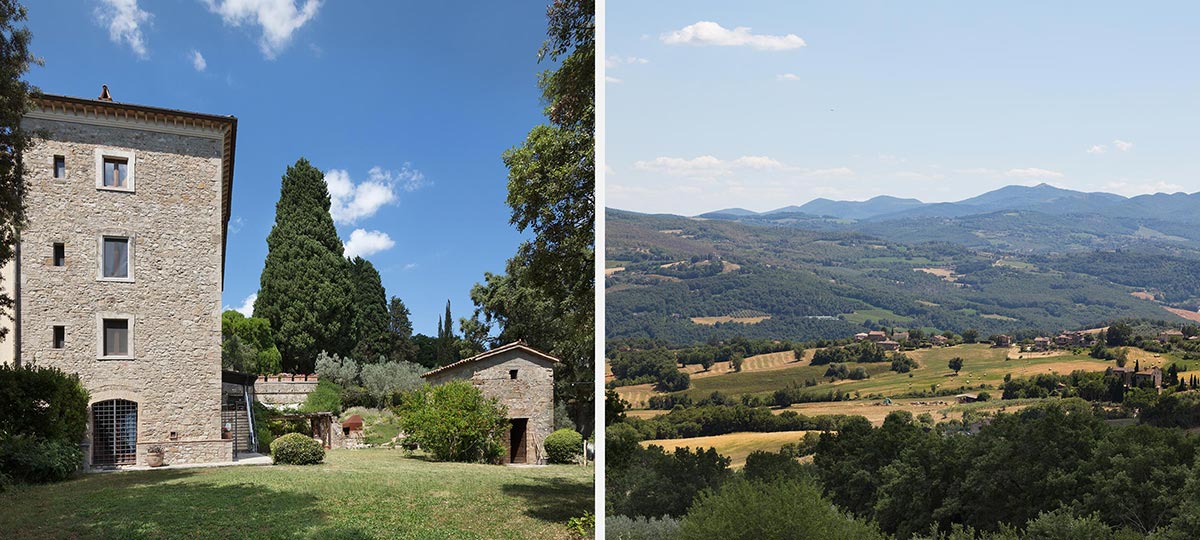
Giorgio Crisafi's home near Todi overlooking the Umbrian hills
Umbria: The Origin
None of this practice floats free of its material geography. Todi, where Crisafi was born, sits inside an Umbro-Etruscan contact zone where clay, vessel, and face have long been bound. The canopic tradition produced urns whose lids bore schematized faces: not portraits in the modern psychological sense, but signs of reconstituted presence, a vessel becoming human through the minimal marks of personhood. The face gives visibility to the absent body. Crisafi works the same logic in a different register.
The kilns at Deruta, at Gubbio, at Todi itself carry a technical tradition he absorbed before formalizing it through his years working alongside Nino Caruso. Leoncillo Leonardi, the Spoleto-born sculptor whom the critic Cesare Brandi ranked as the third Italian sculptor of the twentieth century after Giacomo Manzù and Marino Marini, formed his practice in the same regional kilns and identified clay with his own body: "creta carne mia." Clay is my flesh.
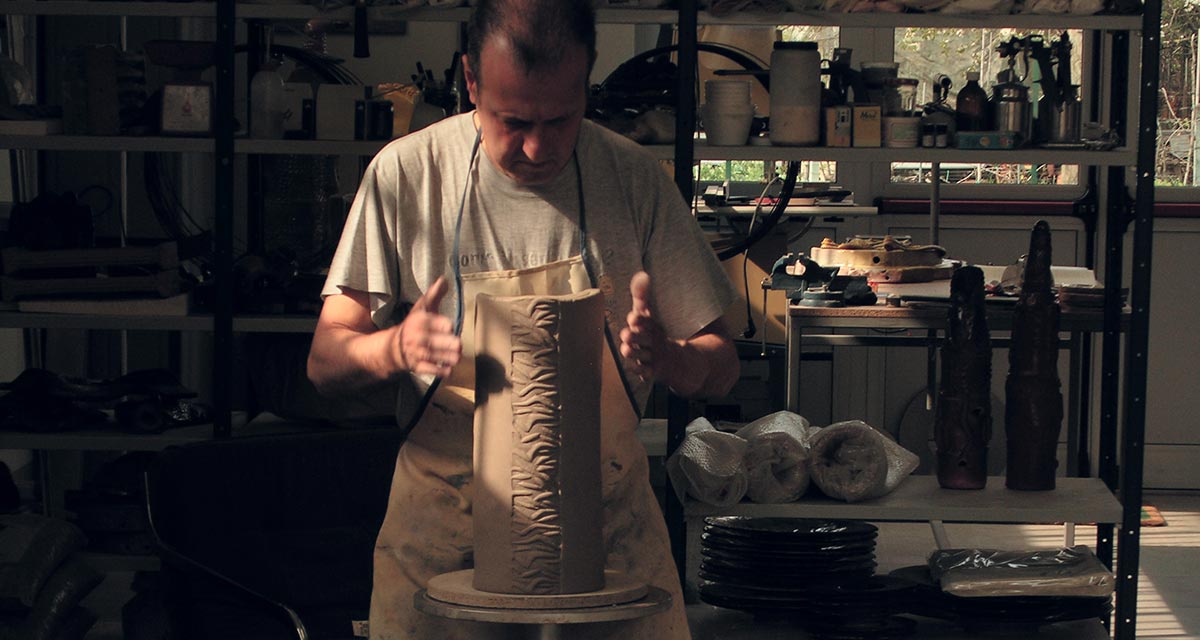
Giorgio Crisafi throwing an Apparizione on the wheel
Crisafi cites Leoncillo as a formative presence for "the expressivity and dramatic tension of his sculptures, and the luminosity of his glazes." Both artists used ceramic as the primary medium for a sculptural ambition that contemporary art has consistently underestimated in that material. Both understood the glaze not as surface decoration but as expressive event, as the moment where chemistry and intention collide at temperature and produce something that was designed for but not fully controlled. The difference is that Crisafi's surfaces drive toward luminosity, iridescence, light held in depth. Leoncillo, who formed his practice in the same regional kilns, drew the opposite conclusion from the same material: his mature work drove toward the mineral and the geological, surfaces treated as bark and stone, matter opened as wound. Same earth, opposite direction.
A philosophical reference can be found in Alberto Burri, another great Umbrian artist: the demonstration that spirituality and silence could be represented through material itself, without narrative, without the figure, without sentiment. Crisafi retains the figure. But the silence that Burri identified as a legitimate artistic ambition is present in the frontality of the work, in the faces that do not speak, the eyes that do not see.